It had always been assumed that the coal seams found in Northern France would extend under the channel into Kent. This theory was proved in 1882 when coal was discovered beneath Shakespeare Cliff in Dover during trial borings for a proposed Channel Tunnel. Work on the tunnel stopped in 1882 while the government considered the military implications of an invading French Army using the tunnel and in 1890 the company made trial borings at the site and proved the existence of both coal and iron ore.
Shareholders of the Channel Tunnel Co. refused to let them exploit the coal so in 1896, the Kent Coalfields Syndicate was established by speculator Arthur Burr. A colliery was opened on the channel tunnel site after a 2,230 foot borehole proved the existence of a viable coal seam. Three shafts were sunk but work stopped in 1897 when No. 2 shaft suddenly flooded killing eight men. Although development of the mine continued, Arthur Burr severed his connections with the colliery in 1903 and established a new company, Kent Coal Concessions, to buy mineral rights in east Kent between Canterbury and Dover and exploit the potential of the Coalfield by setting up collieries. 45 test borings were made by the company and work was started on at least ten collieries but only two, Tilmanstone and Snowdown, were ever productive. Shakespeare Colliery was finally abandoned at the outbreak of war 1914 after only 120 tons had been taken from the mine.
On 18th April 1906 the Foncage Syndicate was registered by Arthur Burr as a small subsidiary company of Kent Coal Concessions to undertake surface works and a small amount of shaft sinking. The new company immediately started a shaft at Tilmanstone Colliery near Eythorne under an agreement with Kent Coal Concessions Ltd.
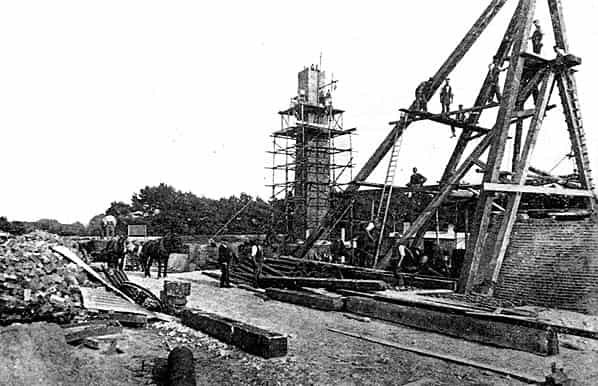
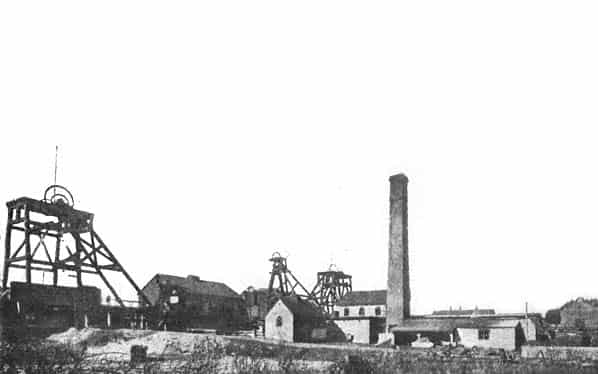
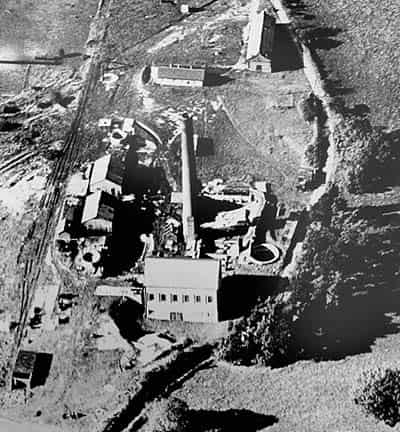
Good seams of coal had been discovered in borings in Waldershare Park, the home of the Earl of Guilford in nearby Coldred so Guilford Colliery, also known as Waldershare Colliery, was started on the edge of Waldershare Park by the Foncage Syndicate in July 1906. A small shaft, which was intended to be carried down quickly to test the coal measures, but when the thick seams were reached in the borings in October 1906 the Syndicate increased its capital to £20,000 in order to provide an adequate sinking plant and surface equipment for the purpose of starting two 18-ft diameter shafts; the small shaft, 298ft. deep, was left to collect water from the chalk for the winding engines. The Syndicate realised that this was insufficient capital to complete the sinking but once the work had started it hoped to sell the undertaking as a going concern at a substantial profit.
However work could not continue through the winter due to the poor state of Singledge Lane, the only means of transport to the main road at Whitfield. It soon became necessary to suspend operations at Guilford until a connection could be made with the South-Eastern and Chatham Railway; it was decided that this should take the form of a tramway, but no connection of any description was made until the East Kent Light Railway linked up the colliery with the main line some five years later, which meant that work was frequently suspended for months at a time.
In May, 1907, when one of the 18-ft. shafts (No. 3) had been sunk to 265 ft. and the other (No. 2) to 30 ft., the Foncage Syndicate attempted to find a buyer to take over the works. A draft prospectus was received from ‘The Guilford (Waldershare) Colliery Company Ltd.’ with capital of £300,000 and this was provisionally accepted. It was found impossible, however, to raise the necessary working capital and the scheme had to be abandoned. At this time, the Guilford Syndicate was formed to take over all rightsand interests in the Guilford Colliery from the Foncage Syndicate concern comprising 1,500 acres of land and all buildings and plant.
The new Syndicate did not have the resources to complete and run the colliery but they estimated that one of the 18-ft. shaft could be sunk to workable coal for an outlay of £12,000 and that on completion of this sinking, the colliery would be easier to sell giving the shareholders a good return on their investment. Their estimate proved wildly inaccurate however and without reaching coal, the Syndicate’s expenditure soon reached £150,000. The 7-ft. exploratory shaft was enlarged to 12 ft. for use as the water supply of the colliery. No. 2 Pit remained stationary for many months at 30 ft., but sinking was carried on intermittently in No. 3 until October, 1908, when, at a depth of 752 ft., work had again to be suspended for the winter months owing to haulage difficulties as the unmetalled Singledge Lane had become almost impassable. However, as the adjacent Tilmanstone shafts (also started by the Foncage Syndicate) were at this time making fair progress, it was thought that the delay would be useful as Guilford could probably be easily sold at a good price once Tilmanstone was raising coal which was confidently expected to be within a few months. There were however long delays at Tilmanstone and is was soon considered desirable to resume the sinking at Guilford as the Syndicate might have to rely on winning coal there if the problems at Tilmanstone could not be resolved.
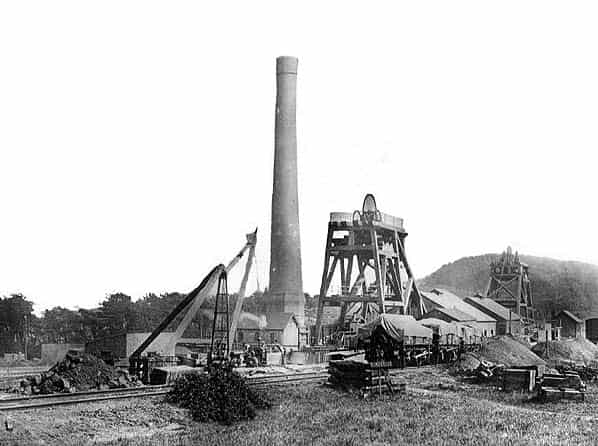
In December 1909, preparations were made for continuing work in No. 2 shaft as it was clear that no real progress was possible without this second shaft. By the end of the following May it had reached a depth of 270 ft., at which point sinking had to be suspended pending the arrival and erection of more powerful winding engines, those already installed having reached the limit, of their capacity. The new 1,000 hp engines were erected above the two shaft.
At this time only £22,000 of the Syndicate’s capital had been issued, whereas the expenditure to date had amounted to £40,000, the difference having been provided by a loan from the East Kent Contract and Financial Company. The Guilford shareholders were informed of the need to raise more money and they were also advised that it would be prudent to wait until Tilmanstone was raising coal before trying to sell the mine, at which time investors were promised a return of £10 - 15 for every £1 invested.
At this time, Arthur Burr was still in charge and as well as working at Guilford he was sinking shafts at three other mines and building surface plant at a number of other prospective sites. Further investment was difficult to attract as Kent had been a prospective mining region for nearly 20 years but no coal had been produced at any of the collieries. It was decided therefore not to wait and in July 1910 a further attempt was made to form a company to take over the pit. The Syndicate shareholders were informed that the ‘Guilford (Waldershare) Coal Fireclay Company, Limited’ was about to be registered with a capital of £460,000. Again the transfer fell through and after further loans had been negotiated shaft sinking was resumed and continued, though somewhat spasmodically, until the end of 1910, when Nos. 2 and 3 shafts were down to 480 ft. and 850 ft. respectively. During 1911 a similarly slow rate of progress was achieved and it was not until November of that year that both shafts had been sunk and where necessary lined to 900 ft.
So far no unexpected difficulties had been encountered in the sinking; water was first encountered in the chalk at 280 ft. and continued down to 330 ft., the total quantity amounting to 100 gallons per minute. This was raised by ‘suction barrel’ (a type of pump) until it was successfully sealed off by brickwork.
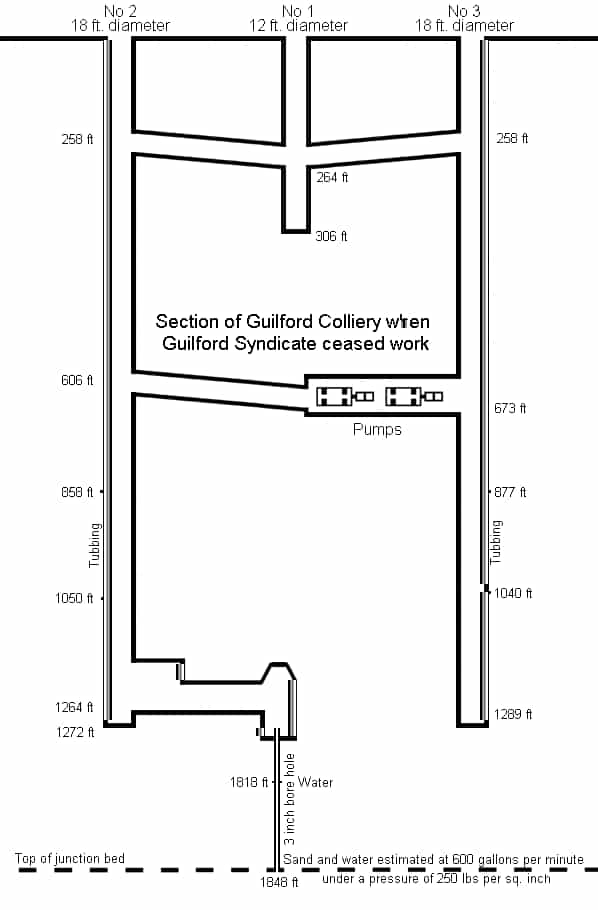
It was now essential that pumps should be installed before attempting to sink the shafts through the Lower Greensand and Wealden beds. Accordingly two Evans double-acting ram pumps were erected in a cross passage between the two shafts at 613 ft., their combined capacity being 800 gallons per minute.
During 1912 there was no further progress but the management made further attempts to secure a direct rail connection with the South Eastern & Chatham main line and in October the colliery finally got its wish with the building of a branch to the pit from Eythorne the East Kent Light Railway which was under construction at this time. As a result another attempt was made to secure sufficient funds to continue the shaft sinking in November 1912. To raise further capital the company issued £80,000 of debentures (long-term loan used by large companies to obtain funds from investors) and it was stated that the Syndicate would immediately form and register a company to acquire the Guilford Colliery as a going concern.
However no practical steps were taken towards the formation of this company until 1st July 1913 when a purchase price of £233,500 was agreed but like the two attempted flotation’s which had preceded it, this scheme also proved abortive. Ten months later, when the shafts had been sunk to within 80 ft. of the coal measures, a sale was arranged that gave the Syndicate only about one third of that amount. But this was sufficient to allow sinking operations to be resumed; sinking at No. 2 shaft resumed in February, 1913 reaching 1,272 ft. by the following September, by which time No. 3 shaft had reaching a depth of 1,269 ft.
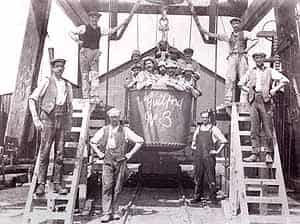
When money was available sinking continued round the clock with three eight hour shifts with fourteen men working on each shift but as the money ran out shifts were regularly cut down to two or sometimes one per day and the workforce on each shift reduced to seven. No particular difficulties were met sinking through the Lower Greensand and Wealden beds, the water in which was entirely shut off by means of ‘tubbing’ (sealing with steel linings).
In the early part of 1914 a side gallery was excavated at 1,264 ft. in No. 2 Pit with a view to putting down a 3-in. borehole to test the strata of the next section to be sunk but water was encountered at 1,316 ft. with a flow up the tubes at the rate of 300 gallons per minute; this was dealt with by winding and the borehole was continued, in soft ground, to 1,346 ft., when what is believed to be the ‘junction bed’ was reached. A considerable volume of water heavily mixed with sand then made its way up the tubes and the borehole was closed with a controlling valve as the boring did not actually enter the coal measures.
It was now considered too difficult and expensive to sink the shafts down to the coal measures and the Guilford Syndicate now found itself in extremely grave financial difficulties; its third promotion scheme had failed; its capital had long since gone and the proceeds from the debenture issue had been spent and over £40,000 was owing to the Contract Company.
On the 14th March 1914 the shareholders were told that due to lack of funds the managers of the Guilford Colliery were compelled to restrict their operations to sinking under conditions of extreme economy, hoping to be able to continue the shafts to a good workable seam of household coal which would have put an end to the financial difficulties. In this they were unfortunately disappointed, for on reaching the junction with the coal measures further engineering problems were encountered.
It was now imperative to either sell the undertaking, provided that satisfactory terms could be negotiated or find sufficient funds to continue the shafts through the junction bed to a good seam of coal. With no further finance available, the company was forced to sell at a loss and on 4th June 1914 a sale was agreed with the French company La Compagnie des Forges de Chantillon at a price of £150,000. The company intended to mine coal for smelting iron ore.
Further development of the mine was halted during WW1 and the shafts were allowed to flood. After the war the water was pumped out and the colliery was prepared for a resumption of shaft sinking. A new power station was built in 1920 and for the first time in many years coal production at Guilford seemed likely.
A development grant of £350,000 was offered by the government but never taken up as the company had failed to seal off water carrying beds above the coal measures by the ‘Cementation Process’ (a crude method of producing steel by heating iron with powdered charcoal, soot and mineral salts, called cement powder) In 1921 it was soon clear that the shafts would never reach the coal measures and all further shaft sinking was halted.
With no possibility of mining coal the French company pulled out in 1929 and the colliery was sold to Richard Tilden Smith, the owner of Tilmanstone. Some plant and other material was moved to Tilmanstone but Tilden Smith had no plans to resume the sinking at Guilford. The remaining mineral leases for Guilford Colliery were acquired by Tilmanstone the following year with the intention of reaching the coal from Tilmanstone rather that completing the Guilford shaft and in 1932 the Tilmanstone management started dismantling the plant for reuse. The branch railway line from Eythorne was abandoned on 14th July 1937 and the track lifted leaving 650 yards as the Eythorne end as a siding, although it was, in part, relaid during WW2 to accommodate a railway gun.
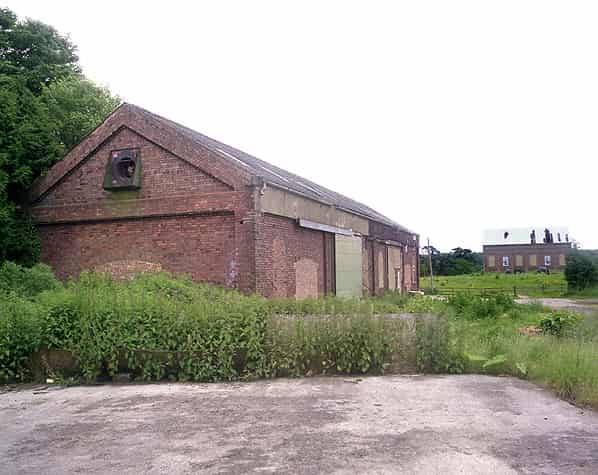
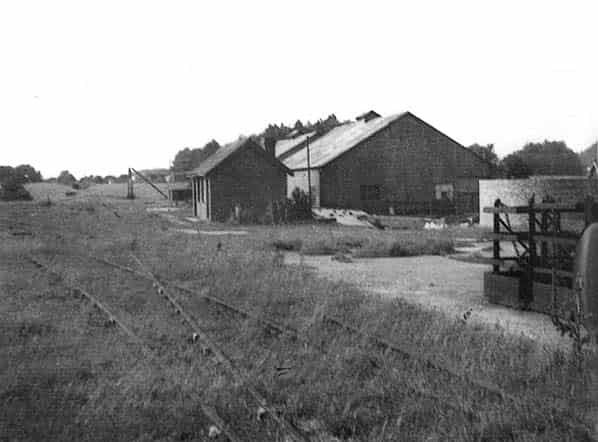
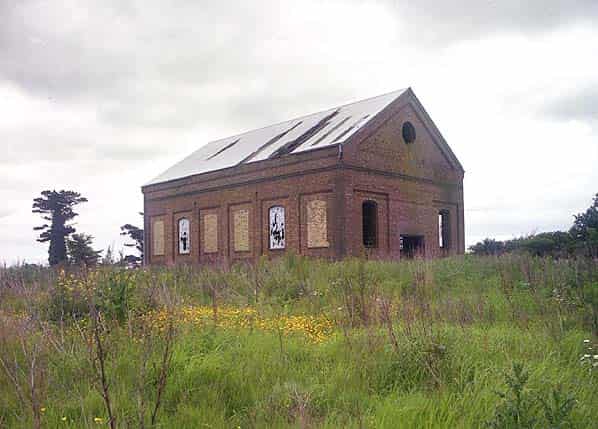
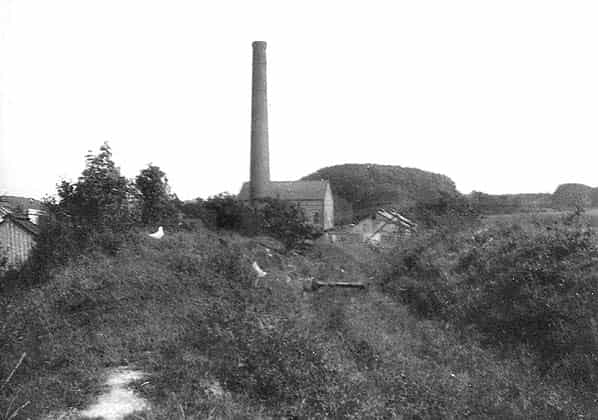
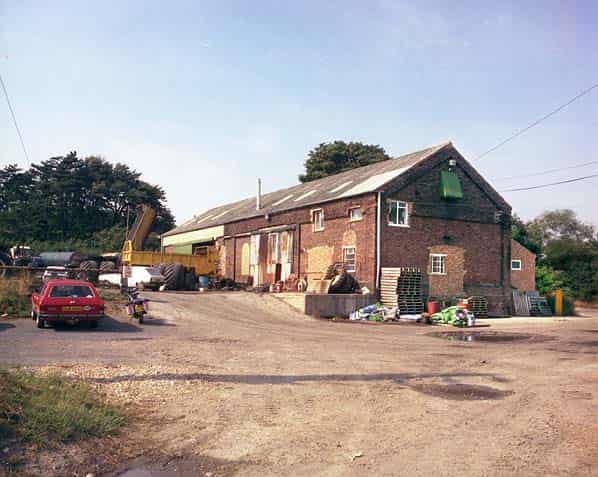
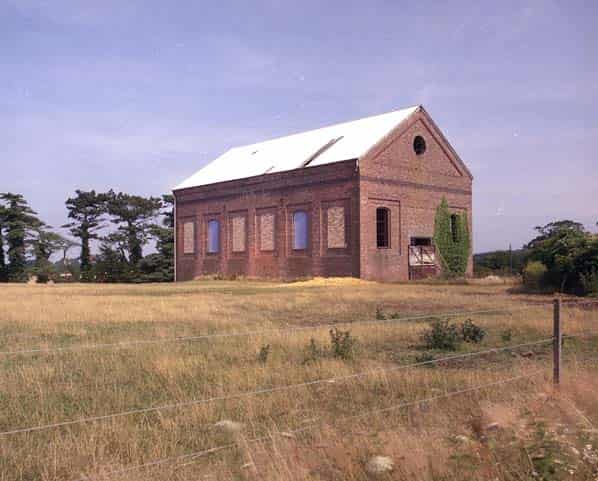
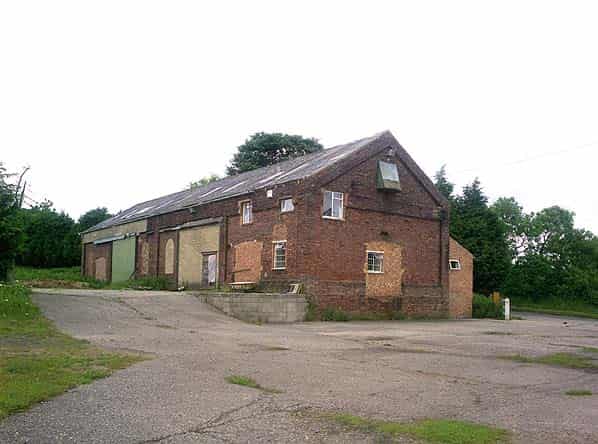
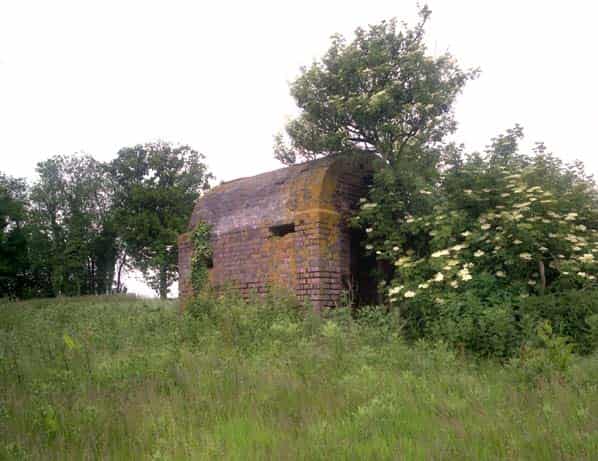
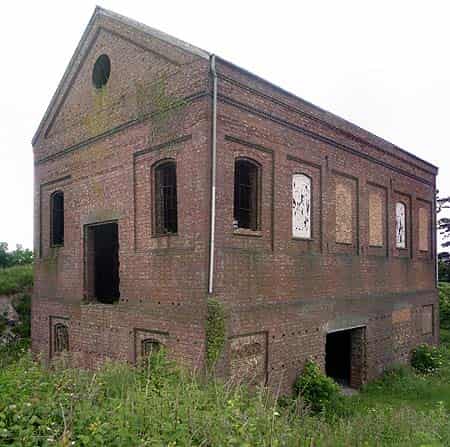
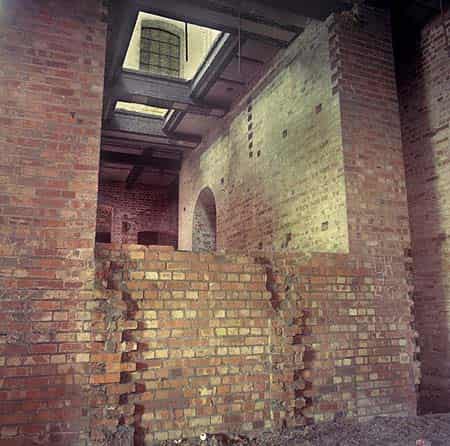
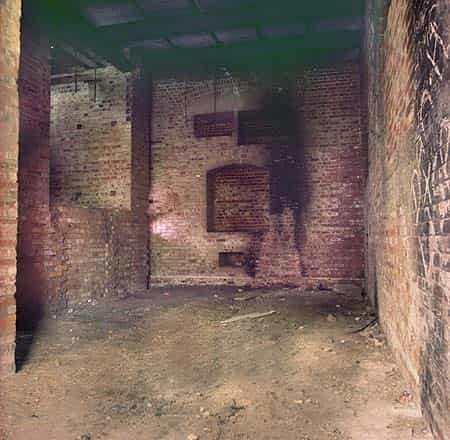
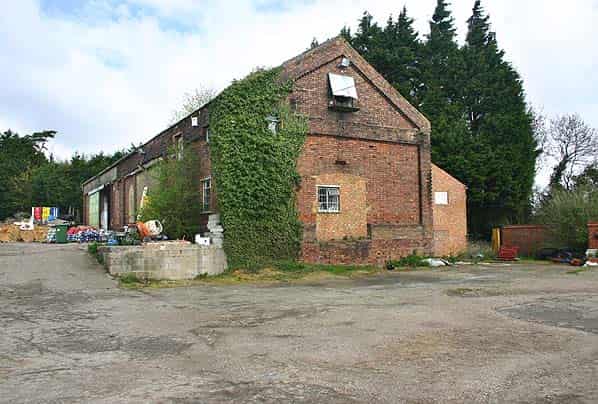
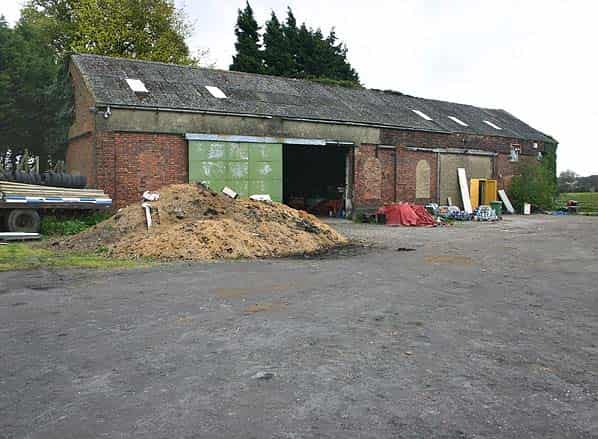
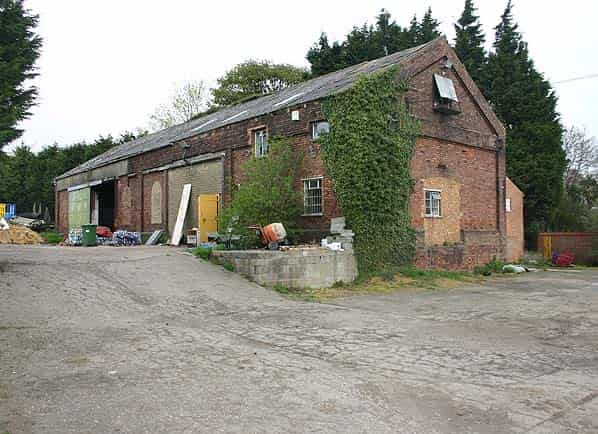
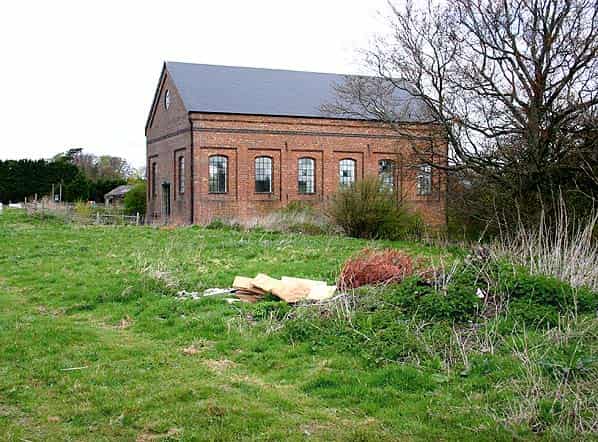
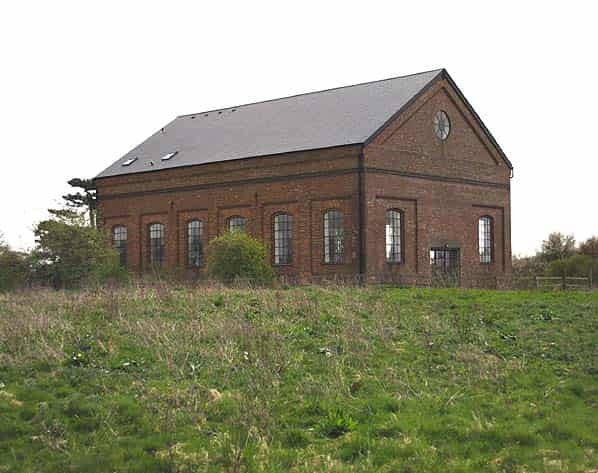
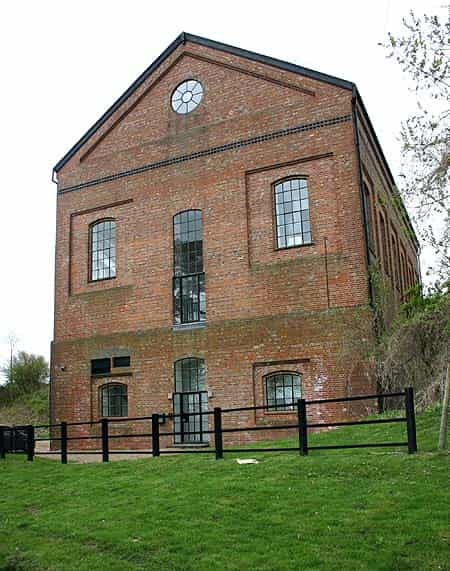
In time most of the buildings were demolished with the exception of the engine house and a long brick workshop on the north side of the site. In 1989 the two shafts were still open and surround by high brick walls. The shafts have now been capped with a thin layer of concrete and grassed over but according to the landowner they have not been filled and are clear down to water.
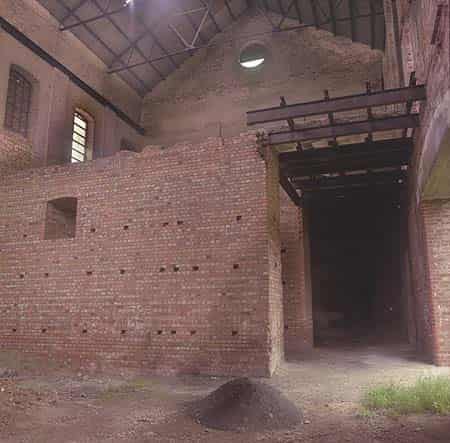
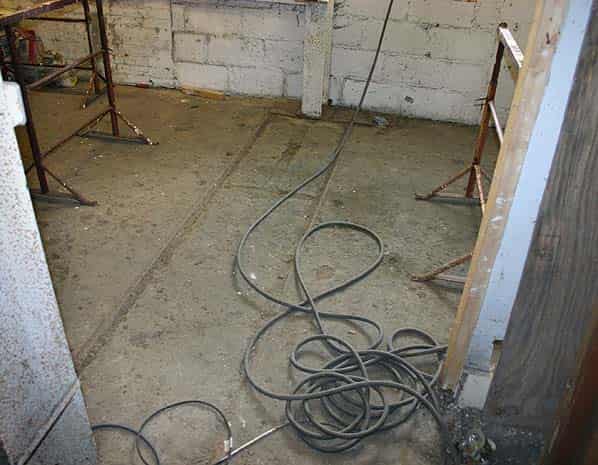
After remaining empty and unused for many years the engine house was fully restored as a private dwelling in the early 2000’s and the workshop remains in good condition and is now used as a farm machinery store and workshop and some narrow gauge railway track is still visible embedded in the concrete floor. Some sections of the branch line to the colliery can still be traced; a short stretch of the cutting on the south-east side of the Coldred-Eythorne road near Coldred Court Farm still exists, with a line of trees marking the course of the line for some distance either side of the road.
Sources:
- ‘The Kent Coalfield - its evolution and development’ by A. E. Ritchie. Published 1919 by the Iron & Coal Trades Review
- ‘Invicta Coal’ unpublished history of the Kent Coalfield by Jim Davies, Robert Ross Job and Richard Tilden Sherren
- The East Kent Railway Vol 1 & 2 by M. Lawson Finch & S R Garrett. Published 2003 by Oakwood Press.
- Colonel Stephens Museum