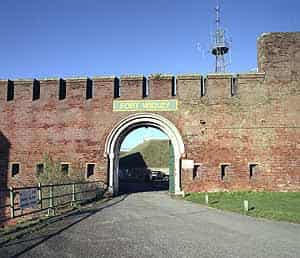
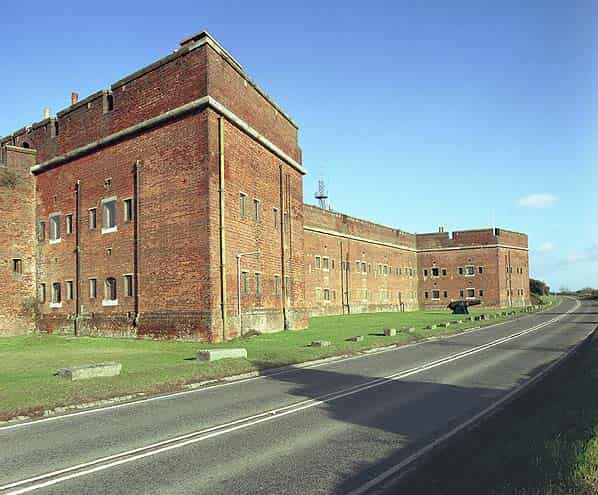
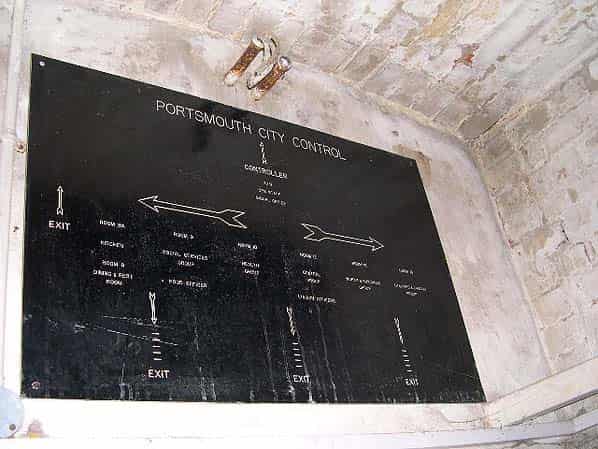
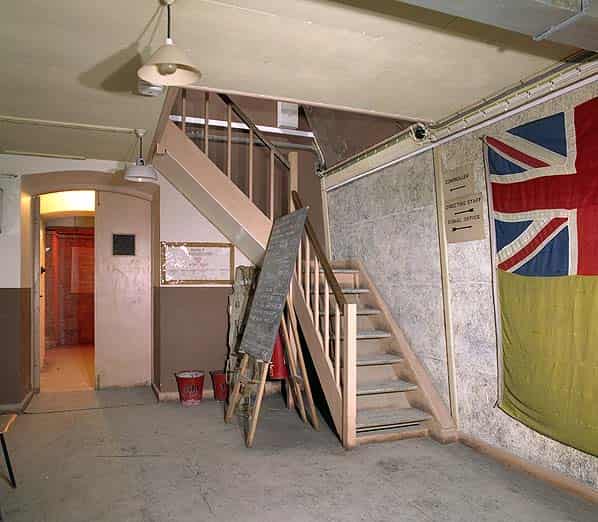
On 19 February 1952, the Civil Defence Committee of Portsmouth Borough Council proposed the construction of a new main and group control for the Borough to be used in the event of a nuclear attack; it was decided this should be established at Fort Widley.
It was suggested that the main underground magazine and the ground floor of the barrack block should be adapted. Work on the conversion started in 1953 and the Borough Control was officially opened by General Sir Sidney Kirkman, Director General of Civil Defence, in January 1955.
The centre was redesignated as Portsmouth City Council Area Control in 1961 and once again redesignated as Portsmouth County Borough Control in 1965 being placed in care and maintenance following the disbanding of the Civil Defence Corps in 1968. The fort was bought by the city council in 1972.
In 1974 it was reactivated as the Portsmouth District Control and also acted as Standby County Control to the Hampshire County Main at Winchester.
During the 1980’s it was redesignated as the Portsmouth District Council Emergency Centre , remaining operational until 1992. In theory it is still available for use although some equipment has now been removed.
In 1955 the windows on the lower floor of the barrack block which are at the same level as the external road were bricked up.
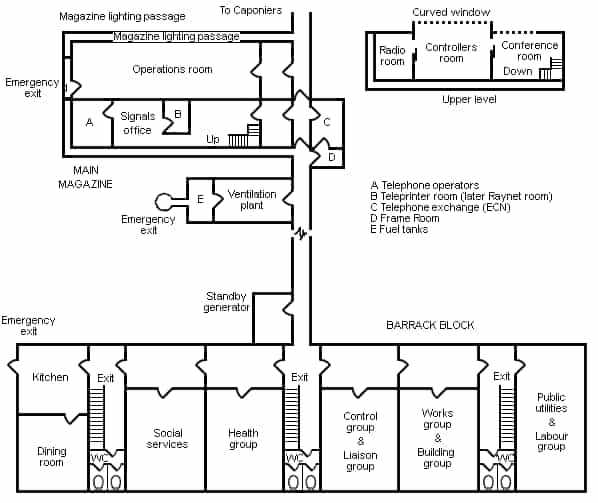
Although protected against radiation, there was no forced ventilation in the barrack block basement so it was not immune from fallout. The tunnel to the magazine was extended across the open gorge into the block with a standby generator house constructed within the gorge and accessed from the new section of tunnel. The Lister diesel generator is still in place.
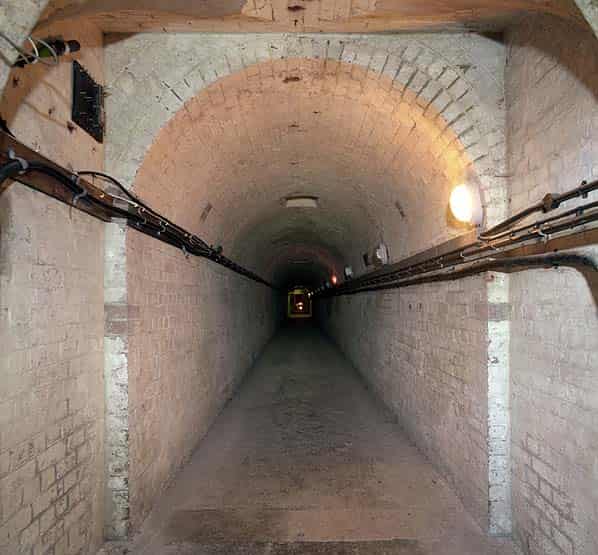
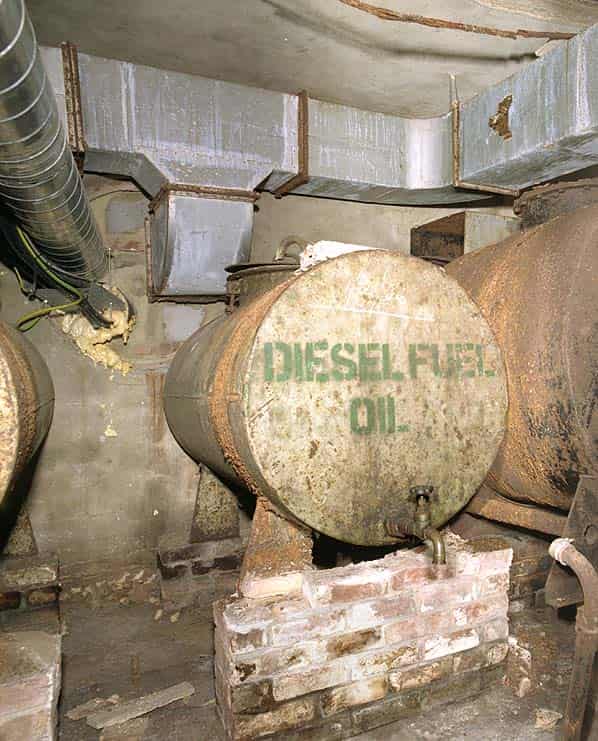
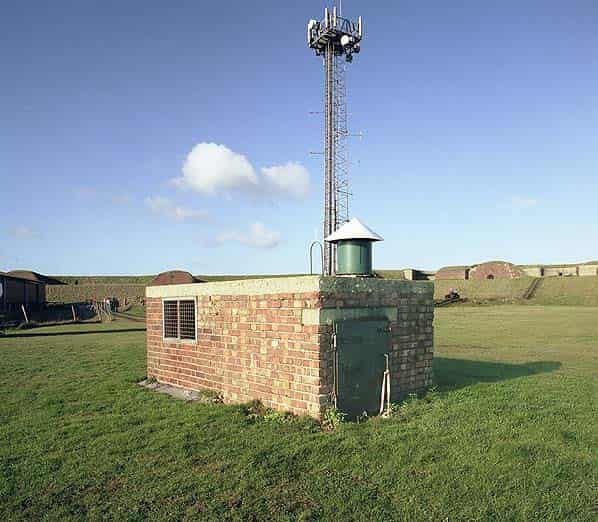
The tunnel is approximately 100 yards in length, terminating at a spiral staircase up to the parade ground 40 feet above. From the spiral staircase three further tunnels fan out to the caponiers defending the north side of the fort. Half way along the tunnel between the barrack block and the spiral staircase the main magazine is located on the west side. Just before the magazine is the ventilation plant room which still retains its fan feeding into metal trunking for feeding fresh air into the control centre. At the back of the room a door leads into the fuel store where there are three cylindrical fuel tanks about the size of oil drums: each of them labeled ‘Diesel Fuel Oil’. There is no pumped feed to the generator and each tank has a tap for manual filling of fuel cans. At the back of the tanks there is a ventilation shaft up to the surface which can also act as an emergency escape shaft. On the surface above there is a low rectangular brick building with a short metal ventilation stack and a low metal door for emergency egress.
The magazine was constructed as a single barrel vaulted room, 57' X 27', for the storage of 2,500 barrels of powder. It was later sub-divided into two rooms for shells and cartridges. A narrow passage runs round three sides of the magazine, there would originally have been glazed apertures in the magazine walls where oil lamps would have been placed for lighting the magazine. These apertures have now been filled in but the lighting passage is still open at one end although now blocked at the back.
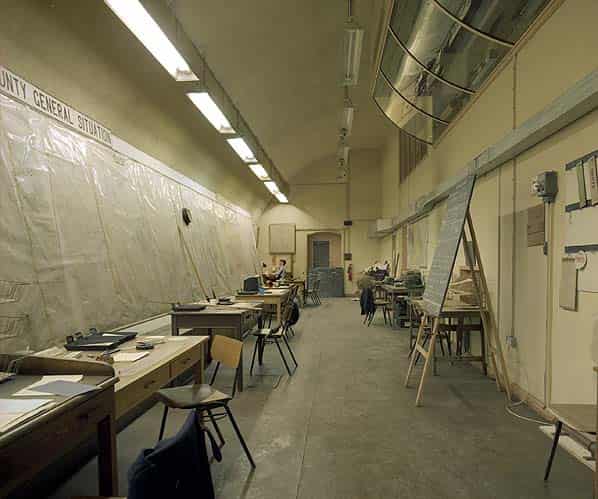
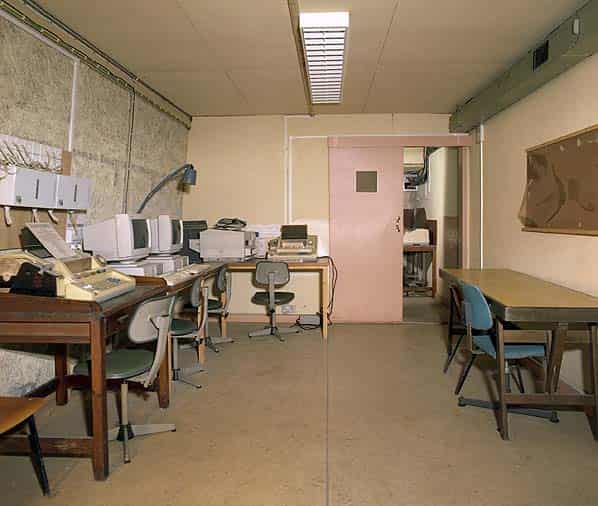
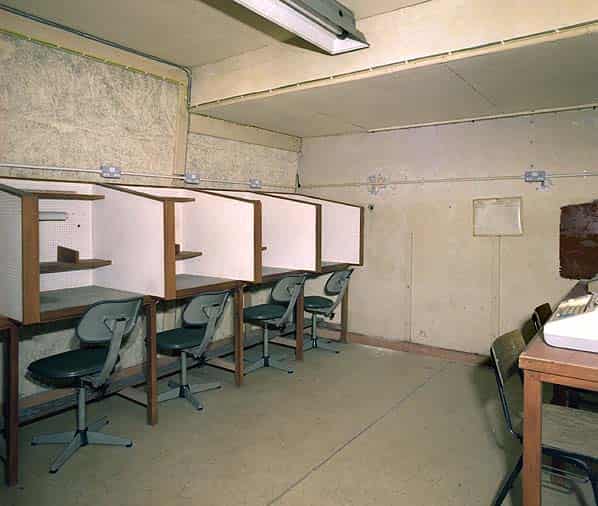
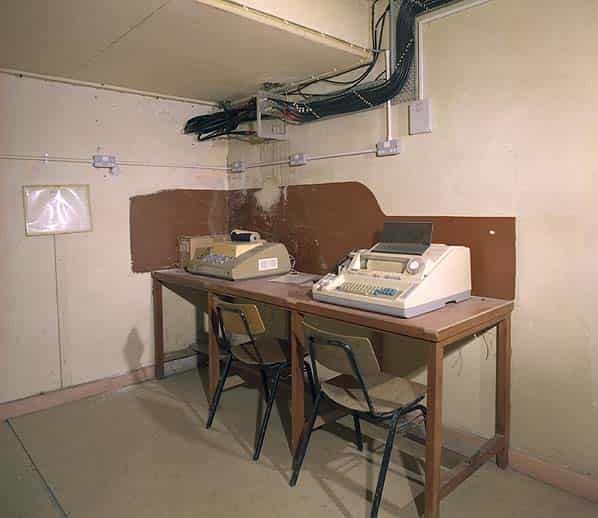
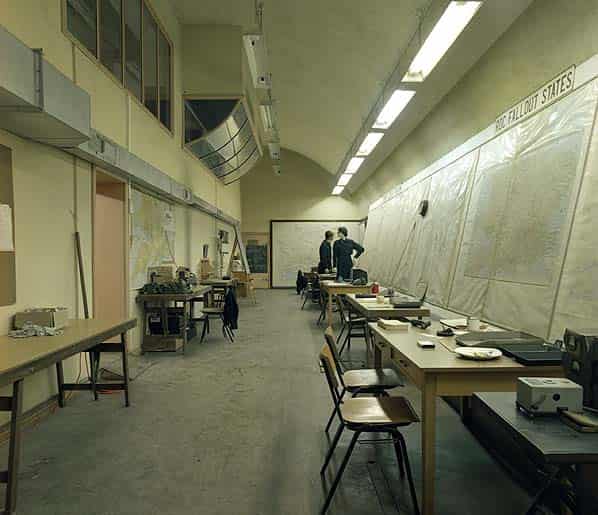
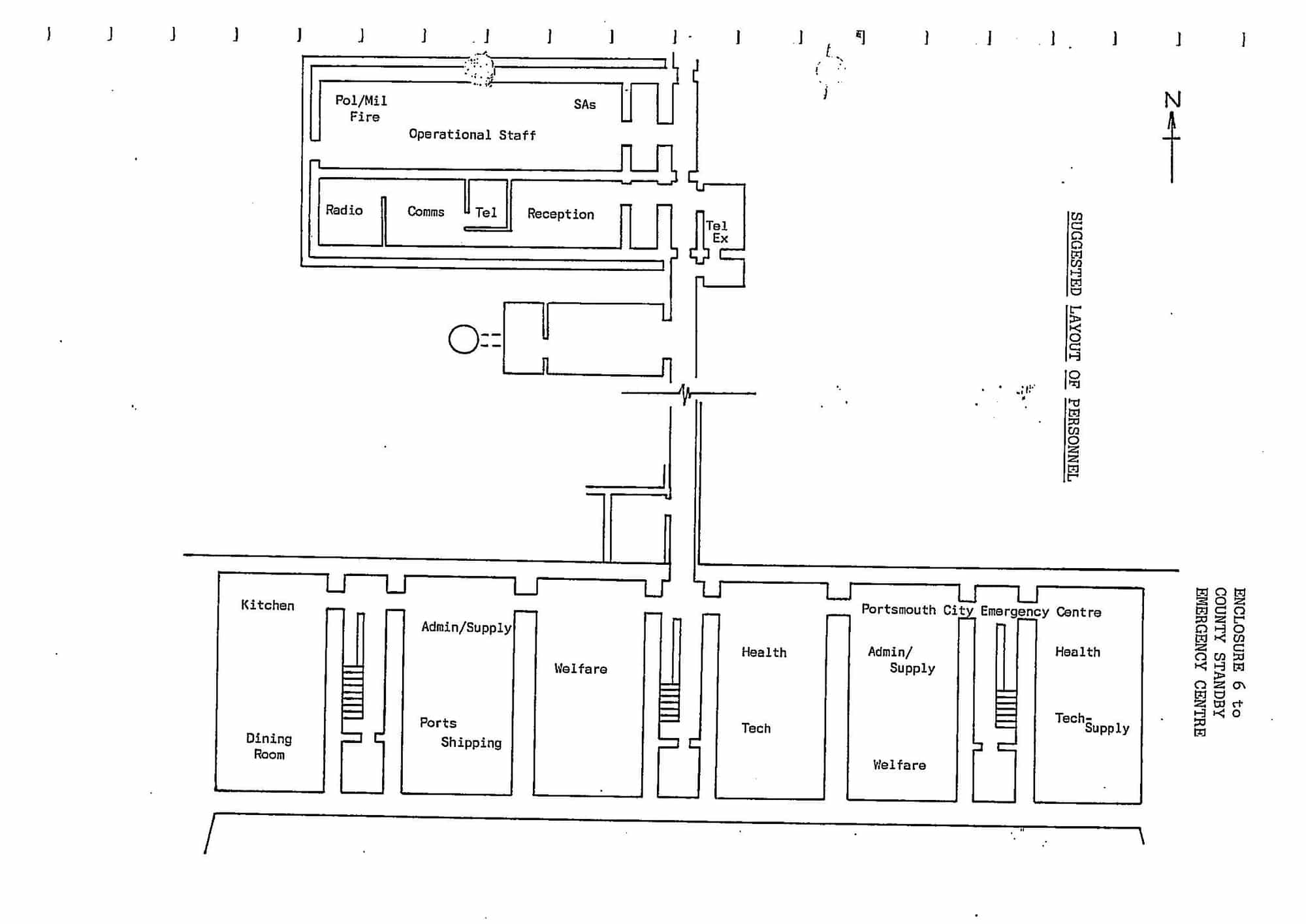
During the conversion of the magazine into a civil defence control centre in the 1950’s, the room was further sub divided with the main operations room utilising the full height of the magazine on the north side while on the south side it was split into two levels with the lower floor divided into four rooms; these were for messengers, teleprinters, the signals officer and at the end the telephone operators room with acoustic booths along two walls. From the signals room there is a large hatch for passing messages directly into the operations room.
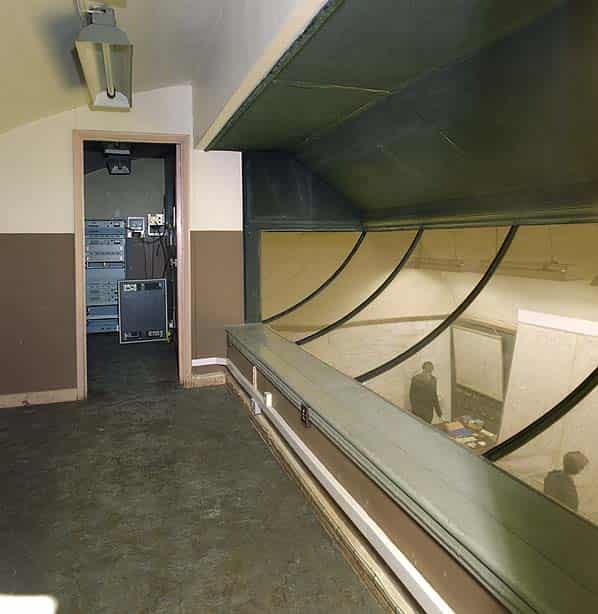
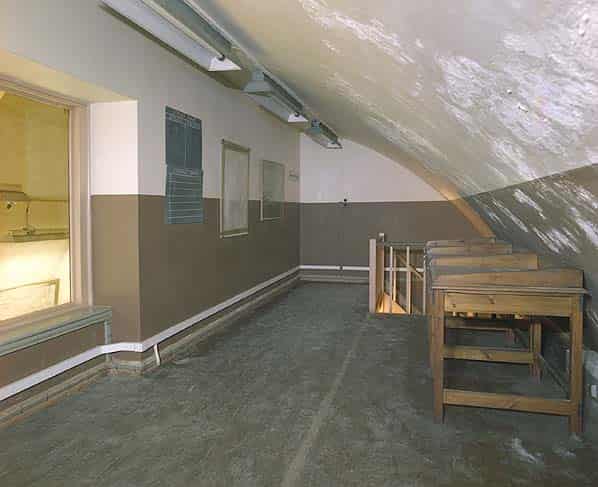
The upper level, accessed by a flight of wooden steps, was divided into three rooms each one leading into the next. The first room was designated as a conference room with a flat Perspex window overlooking the operations room. The second room was for the controller, this has a long curved Perspex window (Similar to those found in AAOR’s and Regional War Rooms of the same period) overlooking the operations room. The third was a small radio room.
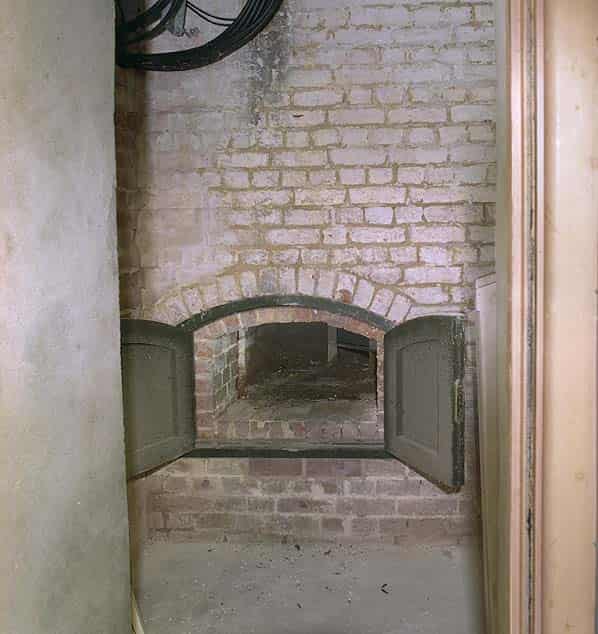
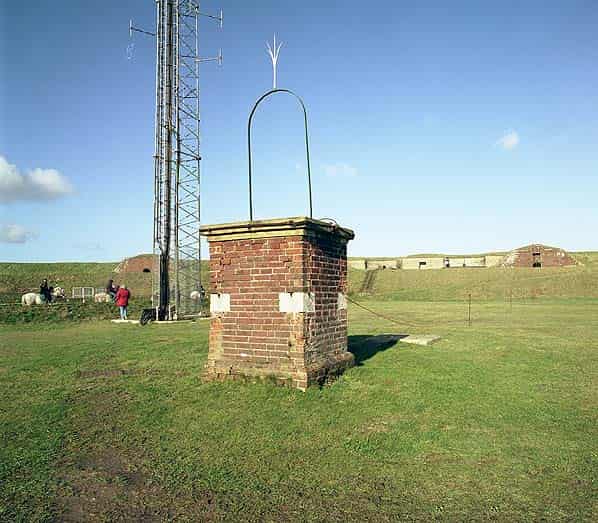
At the back of the operations room is the second emergency escape shaft. There is a door into a small isolated section of the old lighting passage that has been converted into a store room. In the far wall there are two low steel doors, about 15" high which gives access to the original narrow magazine ventilation shaft forty feet up to a low brick tower in the parade ground. Step irons have been installed across one corner of the shaft and it’s possible with difficulty to climb up to the surface squeezing past various cables in the shaft. The top of the tower is now solid concrete but there may originally have been a manhole cover for egress. The walls are only one brick thick however and some of these could easily be knocked out in an emergency.
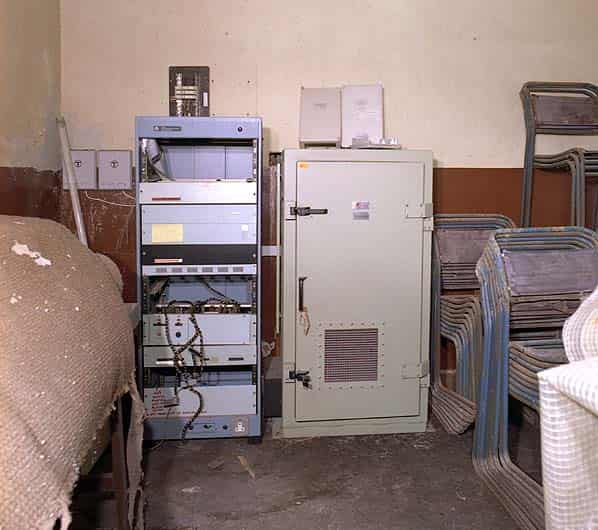
Opposite the entrance to the magazine there are two small rooms which were utilised by the GPO one housing the telephone exchange and the other the main distribution frame. All the original equipment has now gone but an SX50 Emergency Communications Network (ECN) Cabinet still remains along with some BT junction boxes; the cabinet is however empty.
Fort Widley now houses the Fort Widley Equestrian Centre, Peter Ashley Activity Centre and it is occasionally open to the public. It is also possible to book private guided tours of the fort which includes the magazine tunnels, one of the caponiers some of the rooms in the emergency centre. The plant rooms and telephone exchange are not included in the tour and all the rooms in the barrack block are now in private use and not accessible; the kitchen is however still intact.
All the rooms in the converted magazine have generally been retained as they were at the end of the cold war with two manikins now standing in the operations room to add to the sense of realism, despite these, Fort Widley still looks and feels like a cold war control centre and is well worth a visit.
Sources:
- Keith Ward
- Bob Jenner
- Portsdown Tunnels web site
- Peter Cobb