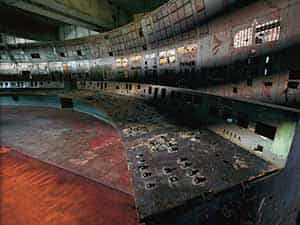
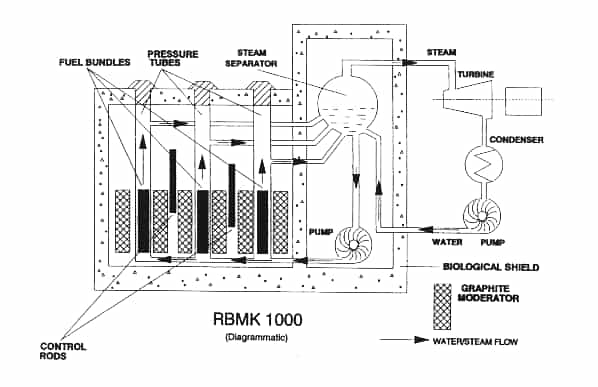
The Chernobyl power station, officially named the V. I. Lenin Power Station, was still an ongoing construction project at the time of the 1986 accident. It was originally intended to have twelve reactors and would have been one of the largest power stations in the then Soviet Union. At the time of the accident in 1986, the plant had four working reactors, another two under construction; with one at 85% completed and another four on the drawing board. All of the reactors, referred to as ‘Units’, were of the RBMK type; a graphite-moderated, light water-cooled design peculiar to the Soviet Union. The design required an electricity supply to drive the motors of the control rods and also to operate the pumps for the cooling water; an aspect which would lead to the disastrous experiment in 1986.
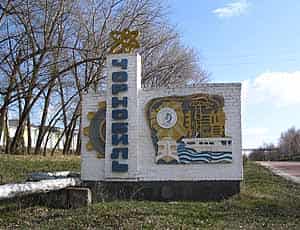
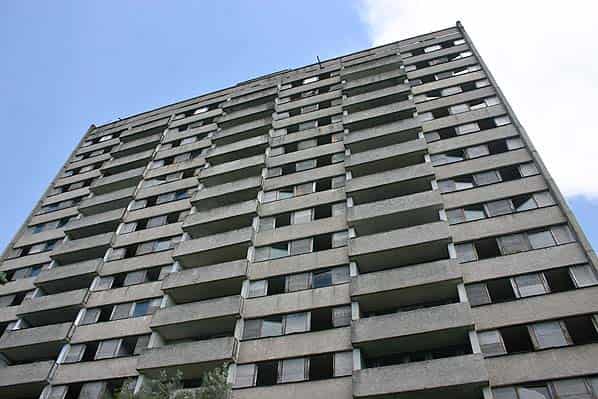
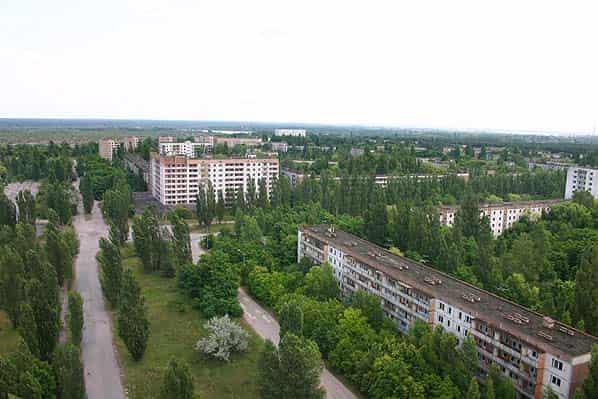
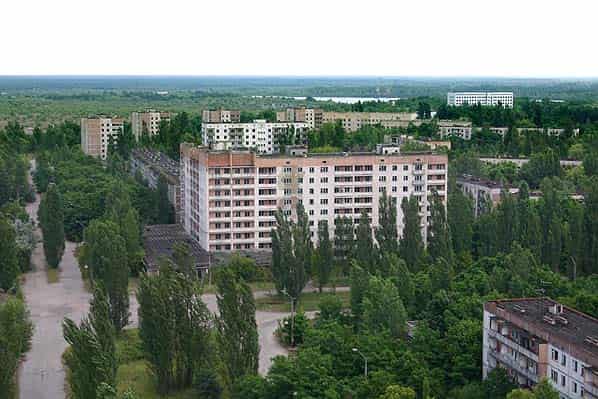
The nearest existing town was Chernobyl, this is the Russian name, the Ukrainian version is Chornobyl. Although this is now preferred, in the context of this article I will use the Russian names as these were in use at the time of the accident. Work began on the power station in the early 1970s and also on a state of the art new town nearby to house the workers. This town, Pripyat, was to be a splendid example of Soviet architecture and was indeed a very pleasant place to live in the 1970s and 80s.
Chernobyl had already suffered one accident in 1982. Unit 1 had been shut down for maintenance and when it was re-started, the valves to some of the water pipes were inadvertently left closed. Some of the fuel melted and there was a leak of radiation, but this was not a true meltdown and other than engineers repairing the damage, there was little exposure of any personnel to radiation. The unit was eventually repaired and put back into service.
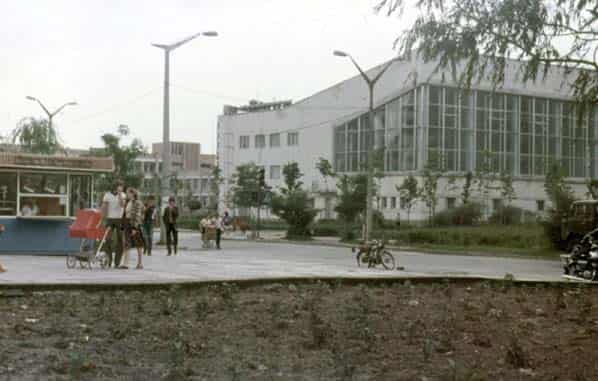
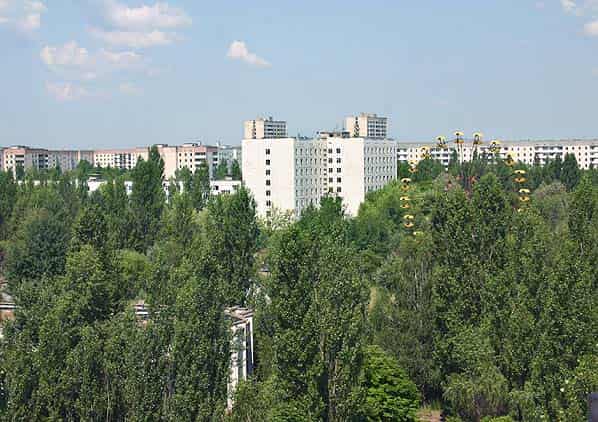
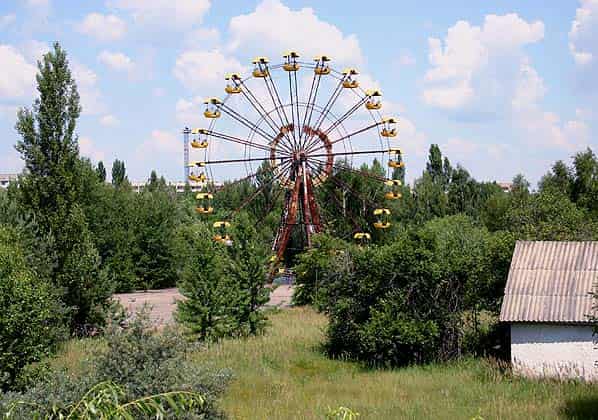
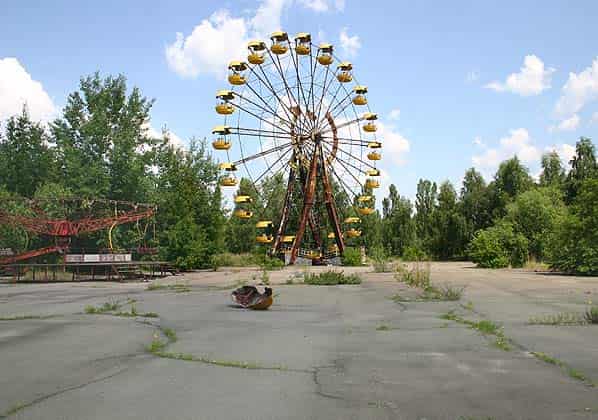
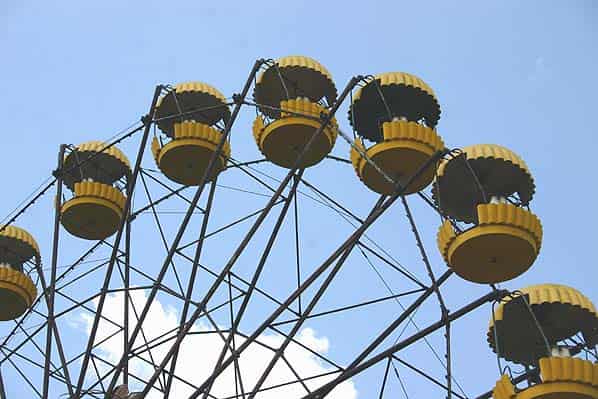
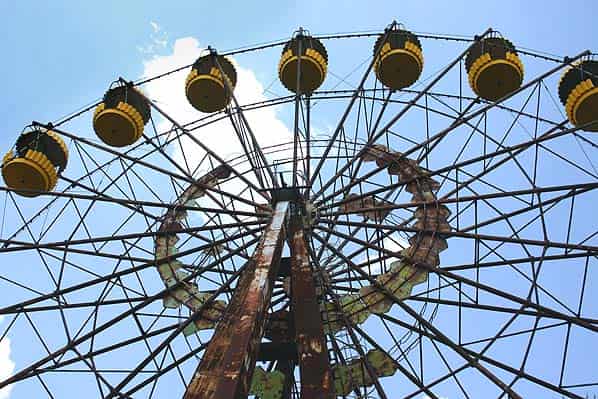
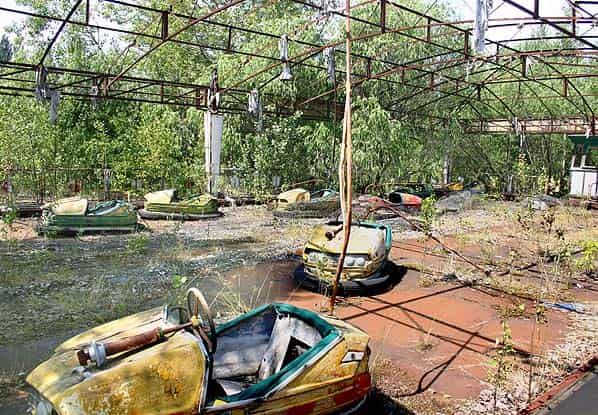
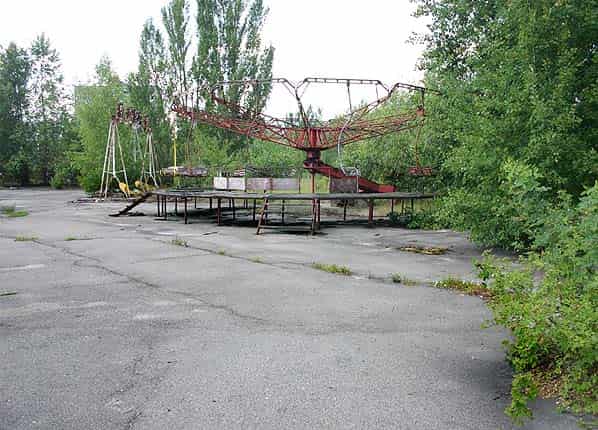
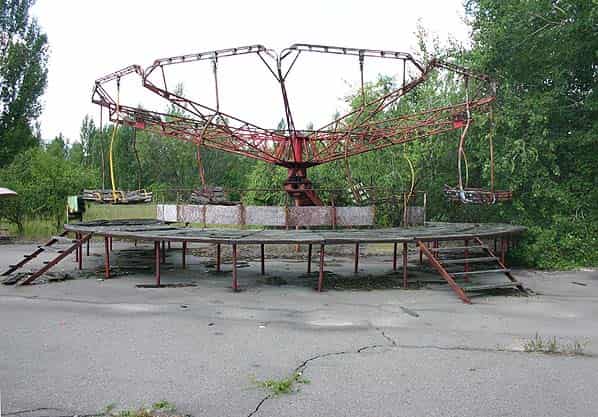
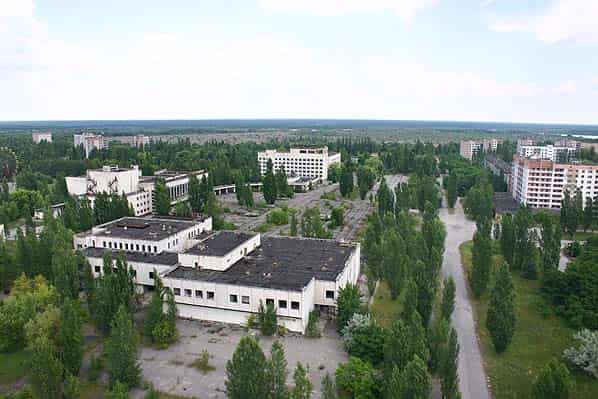
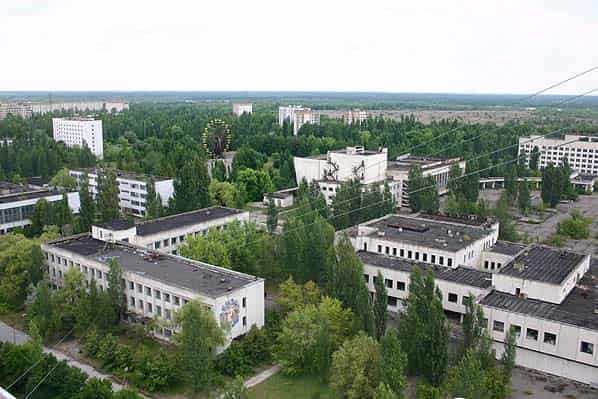
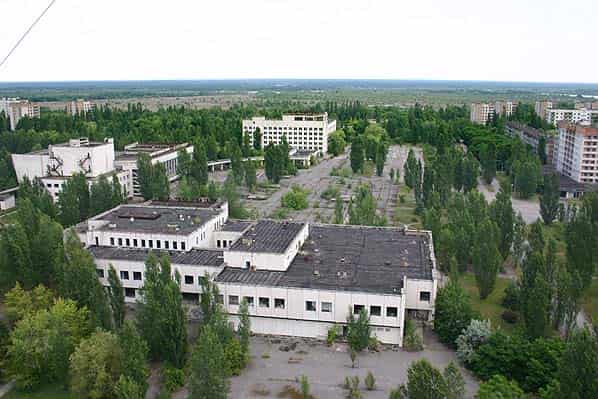
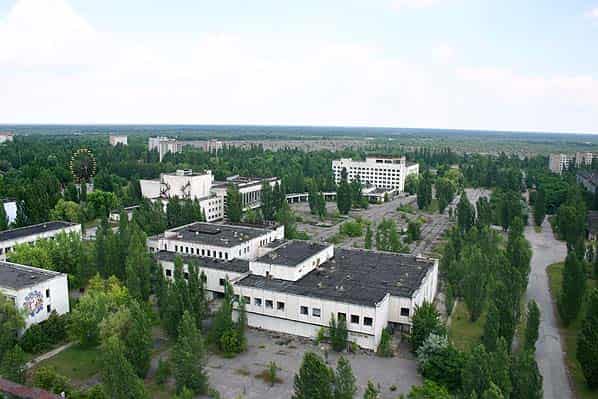
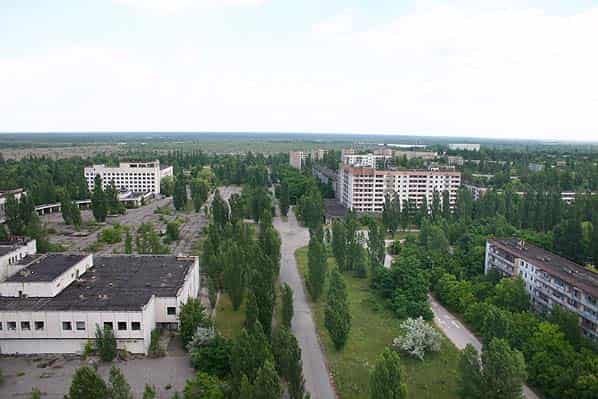
Pripyat was a well-planned town with plenty of open spaces. The Cultural Centre, the focal point, had a theatre, cinemas and sports facilities and just outside was the permanent amusement park with a Ferris wheel, dodgems and other attractions. The town was linked to Kiev by rail and also by water and the residents were only a short walk away from the forest and rivers. Everything was new, the shops were well-stocked by Soviet standards and most of the residents were very happy living there.
THE MELTDOWN ON 26th APRIL 1986
Unit 4 was to be shut down for routine maintenance, so this was a good opportunity to carry out a test on the turbines driven by the power produced by the reactor. It was not certain whether, should there be a failure, the turbines could generate enough power as they ran down to keep the cooling water pumps working. There was a delay of almost a minute between the power supply failing and the start-up of the diesel generators and this had always been a worry to the engineers. Modifications had been made to the turbines which should ensure that the pumps could be run from them as they ran down.
The reactor would need to be run at low power for this test to take place. This of itself was fairly straightforward, but another potential problem was the safety system. The decrease in the water supply or start-up of the back-up generators could trip the safety sensors and give a false reading of an accident, causing the emergency core-cooling system to activate and shut the reactor down automatically.
The chain of events that were to culminate in the world’s worst nuclear accident began at 14.00 on 25 April 1986, when the emergency core-cooling system was switched off for the above reason. The test was scheduled to take place then; however a grid engineer at Kiev telephoned the power station and informed them that the grid required the power from the turbine that was about to be run down. The test was postponed, and the grid engineers gave permission for the turbine to go off-load at 23.00 that evening. A few hours later, at around 01.20 on 26 April 1986, came the disaster.
The reactor had been running for hours at only half power; when operating at a reduced capacity the iodine and xenon gases generated as a by-product of the fission process also had a damping action. The operators continued to reduce the power, but these gases were now interfering with the chain reaction. The reactor was in an ‘iodine well’, attempting to raise the power again from this state is dangerous and the best things to do were either to shut it down, or keep it running for another twenty-four hours to allow the xenon and iodine to decay; this would mean postponing the already delayed test another day. Instead, they attempted to raise its power and withdrew more control rods.
Less than twenty of the two hundred control rods were now in the core. The falling power was causing the pressure to fall in the steam drums, where the water coolant was separated into steam, which went on to drive the turbines, and water to be re-circulated through the core. This fall in pressure in the steam drums would also automatically trip the shutdown mechanism. The operators, under the orders of a senior engineer who was anxious to complete the test, overrode this shutdown mechanism as well. A few minutes later the power in the reactor began rising alarmingly; an operator pushed the emergency shutdown button to drop all of the control rods into the core. At this point an operative entered the control room and reported that he had seen the caps to the fuel channels jumping up and down on the charge face of the reactor.
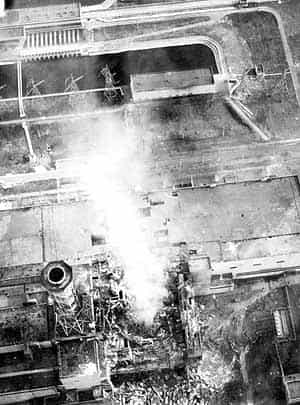
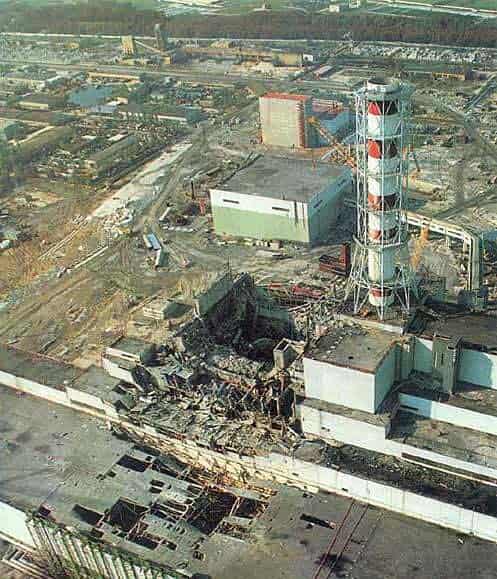
The control rods jammed, and when the motor was turned off to allow them to fall into the core under their own weight they still did not move-probably because either the channels had become warped by the heat, or the tremendous pressure in the core was holding them out. The water coolant had by now expanded to superheated steam, which then exploded. The blast dislodged the upper shield of the reactor, hurled the heavy charge machine across the hall, and blew off the roof the fourth unit. Valeri Khodemchuk, an engineer whose post was in the reactor hall, was killed in the initial explosion and his body was never recovered.
The damage to the reactor core was horrific. The graphite had been ignited and was now burning, and the initial explosion had caused lumps of the graphite and even pieces of nuclear fuel to be ejected to atmosphere. There was nothing between the intensely radioactive core and the sky, and millions of curies of radioactivity spewed into the air. So deadly was the area that two workers who looked into the reactor from above, for no more than a few minutes, died soon afterwards. They reported seeing not only the light of the fire, but the sinister blue glow of highly radioactive material.
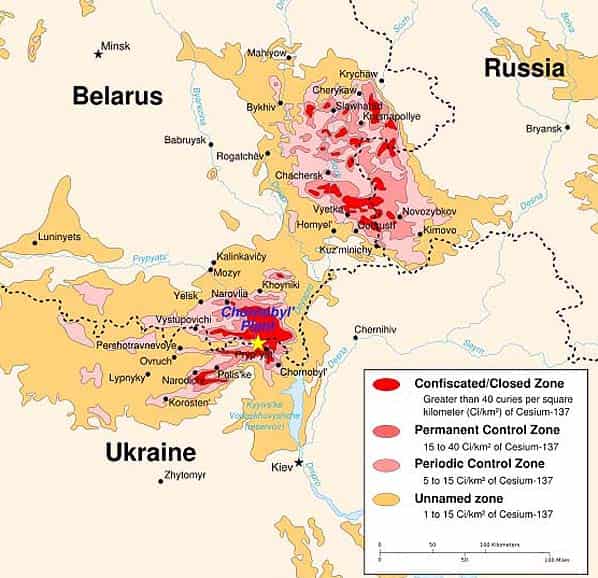
Firemen fought the fire from the roof of the adjacent turbine hall, which had itself been set alight. They were working unprotected in a highly radioactive area and some began to feel ill-effects after just thirty minutes. By the time they were relieved of duty, most had suffered unsurvivable doses. The heaviest particles fell in the woodland between the power station and Pripyat, killing the trees. New trees have now grown up, but the area remains known as the Red Forest. The fall-out moved around Europe to the north-west, and is still detectable in parts of the UK and elsewhere. Northern Ukraine and Belorussia were particularly badly affected.
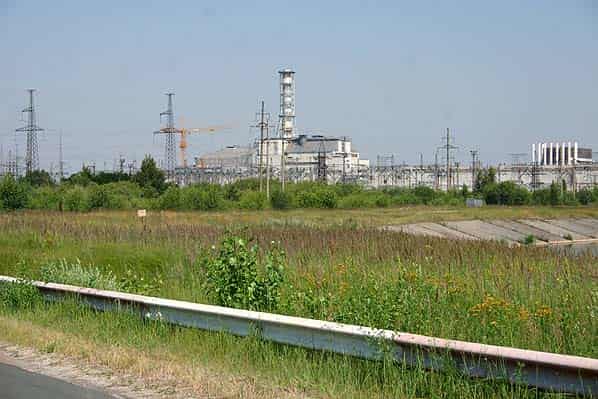
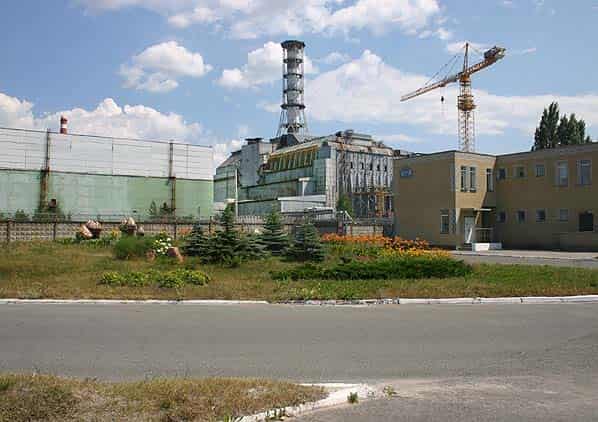
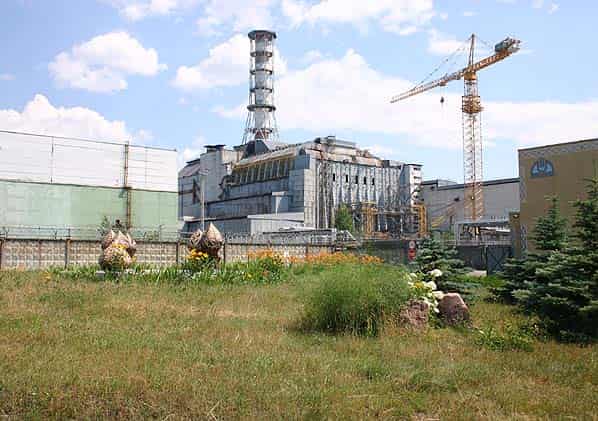
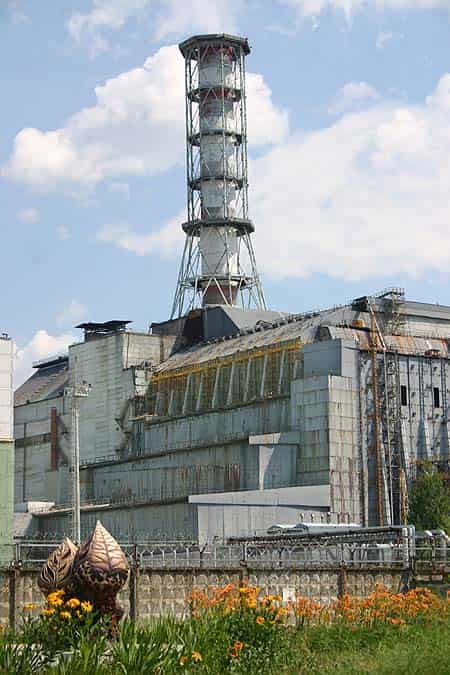
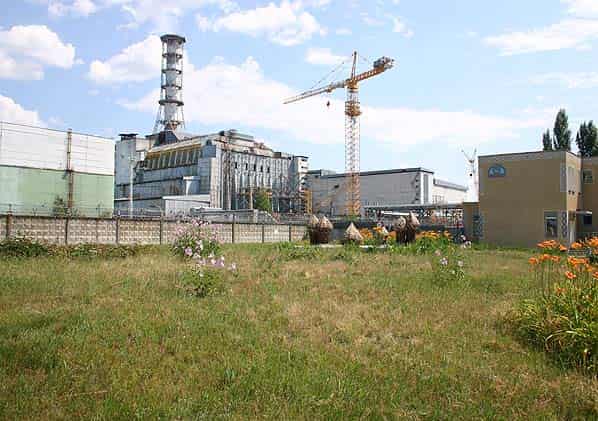
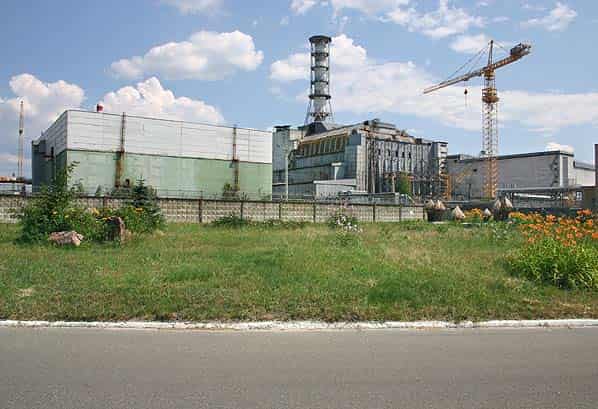
Helicopters began over flights of the power station within twenty-four hours, dropping sand and boron into the crater in an attempt to fight the fire, and specialist workers later began tunnelling under the fourth unit to construct a heat exchanger below the ruins. Over the next seven months, a concrete cover was placed over the remains of the fourth unit. Although it is universally known as the ‘sarcophagus’, the official term for it at Chernobyl is the Shelter-Object, the nearest translation of the word used on-site. As with the pilots and diggers, many of those involved in its construction suffered illness and long-term health problems. Although now in urgent need of stabilisation and repair, when the extreme conditions of its construction are taken into account, the Shelter-Object is in its own right a remarkable piece of engineering.
Once the Shelter-Object was complete, investigations began inside using remote equipment. The upper shield remained balanced on the rim of the containment vessel with little means of support. It was nicknamed ‘Ylena’ as the pipework dangling down each side of it reminded them of a lady with long hair. When a hole was drilled into the reactor to ascertain the state of the core, the scientists were shocked to find that the containment vessel was empty. Subsequent investigations revealed that the molten nuclear fuel had oozed out of the reactor base, which was forced down by the pressure of the explosion. The fuel poured through pipes and other conduits into the reservoir known as the bubbler pool and the rooms under the reactor, mixing with the packing sand and eventually coalescing into an intensely radioactive lava-like material. Although at the time this was very fortunate, as it encapsulated the nuclear fuel, this now poses one of the worst hazards inside the Shelter-Object. Inside the sarcophagus the temperature is around forty degrees Centigrade and the humidity is high, leading to dripping condensation. This water is now slowly eroding the meltdown lava, and the potential radioactive water and dust should this dry out, is a source of concern.
During the difficult and dangerous construction, the major load-bearing beams of the Shelter-Object were placed directly on the remains of the reactor hall. After two decades, the western wall began to be forced off the vertical by the weight of the roof and it was shored up. The building is monitored very closely, as any collapse of material into the remains of the reactor could create a radioactive dust cloud creating more contamination.
Pripyat had been preparing for the May Day parade, one of the most important events in the socialist calendar and people were collectively in high spirits. As the town woke up on 26 April, most people continued their activities as normal. Word got around that there had been an accident at the power station, but the official line was that it was nothing to worry about and only those whose relatives were involved became anxious. Children went to school as normal. However, the gravity of the situation soon became apparent and on 27 April, as the helicopters began their sand-bombing runs over the reactor, the order was given to evacuate the residents of Pripyat at once for their own safety. The evacuation was handled fairly well; rather than have people waiting around outside, people were collected from their homes. A 30-kilometre exclusion zone was eventually placed around the area, with even stricter controls at the 10-kilometre point, where there was a second protection zone.
THE SITE TODAY
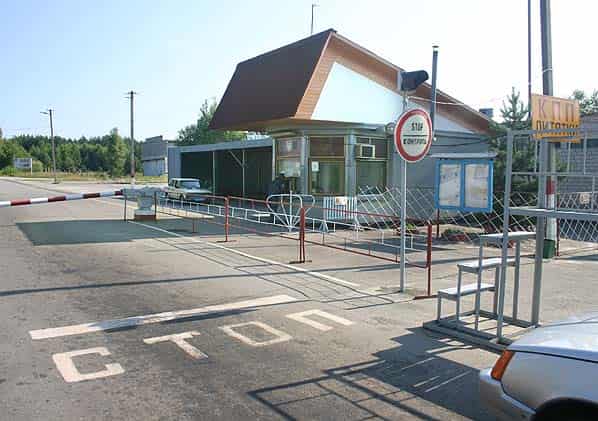
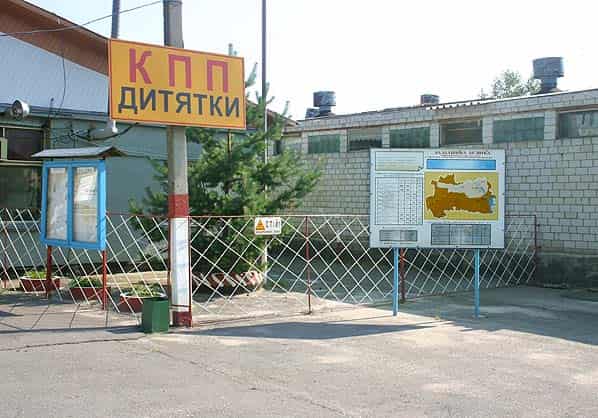
The 30-kilometre and 10-kilometre exclusion zones remain in place, as does another around the town of Pripyat. A permit is required to enter the 30-kilometre zone; organised trips will obtain the necessary documents for visitors.
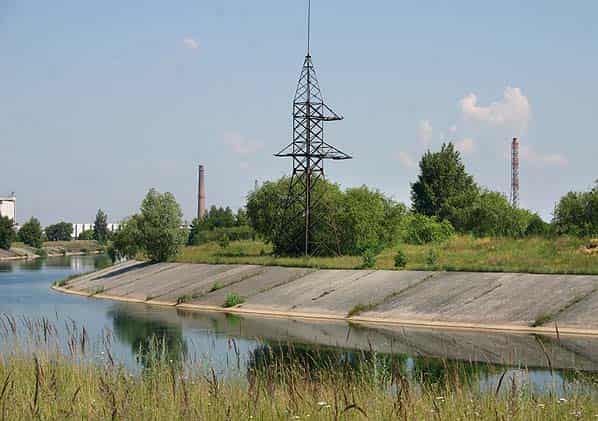
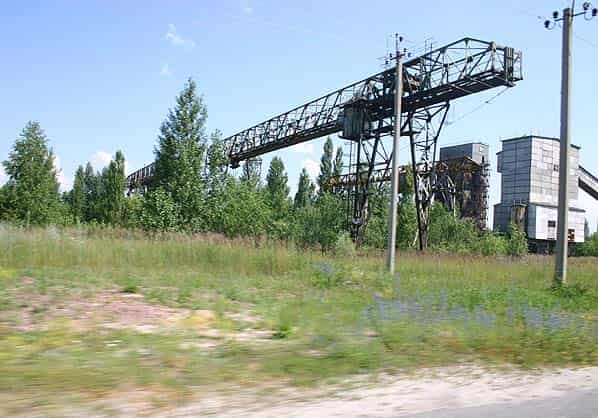
The area around Chernobyl is very flat, being a part of the Pripyat Marshes and gradually becomes forested. A series of derelict electricity pylons, most missing their cables, lead into the forest towards the power station.
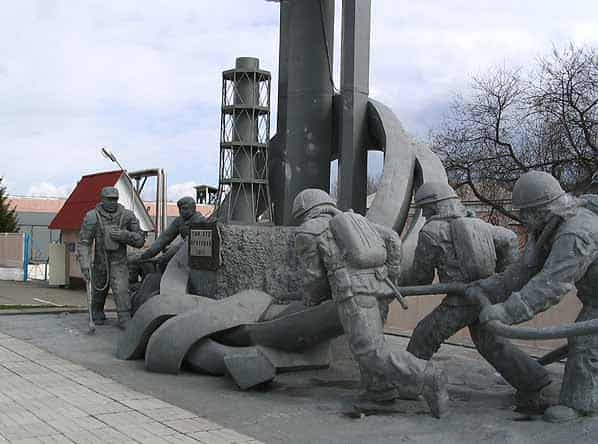
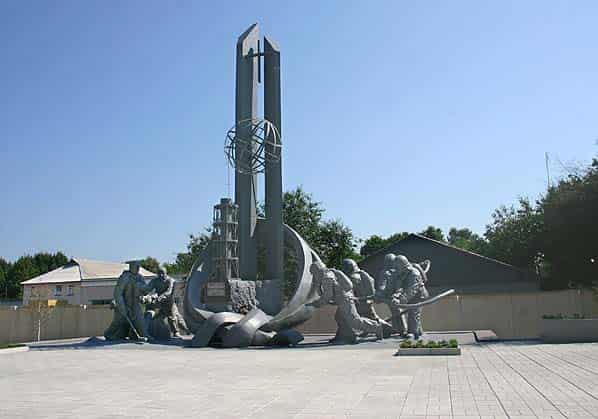
The town of Chernobyl is inhabited workers in the area, on a fortnight-on, fortnight-off basis. The flats are maintained and there is a small shop with basic supplies. Near to this shop is the firemen’s memorial. This is notably naturalistic, in contrast with the formal style of most Soviet statuary and is an ‘unofficial’ monument; it was designed and erected by the firemen themselves and is not maintained by the state. It depicts a scene from the first hours after the accident, showing eight workers around a model of Unit 4 in the process of fighting the fire, one already succumbing to radiation sickness.
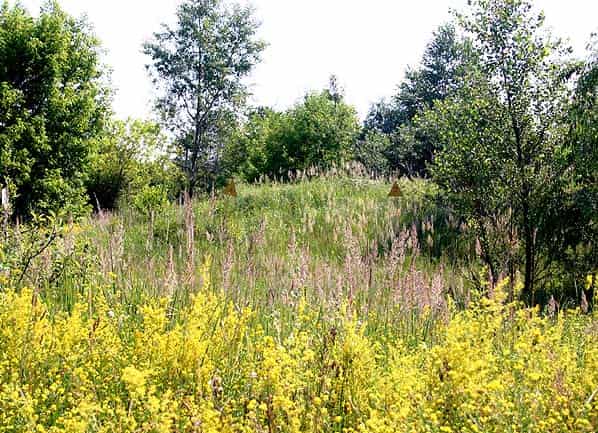
Between Chernobyl and the power station are the remains of a few of the small settlements. Some buildings remain, including a little kindergarten, but many others were bulldozed and buried at the time; small mounds with signs warning of contamination are the only traces of some of these houses. The area has always been forested and the power station’s chimneys are only just visible in the trees.
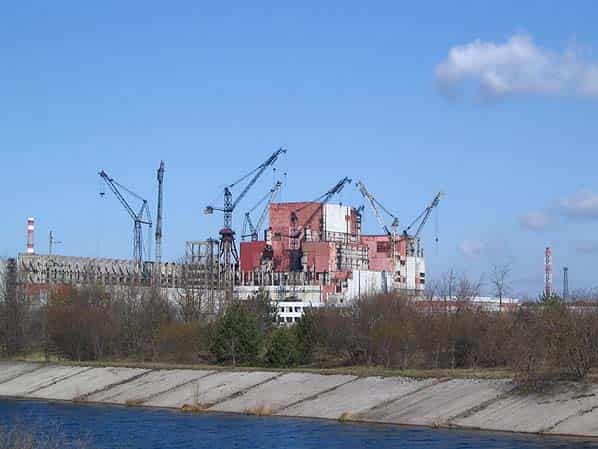
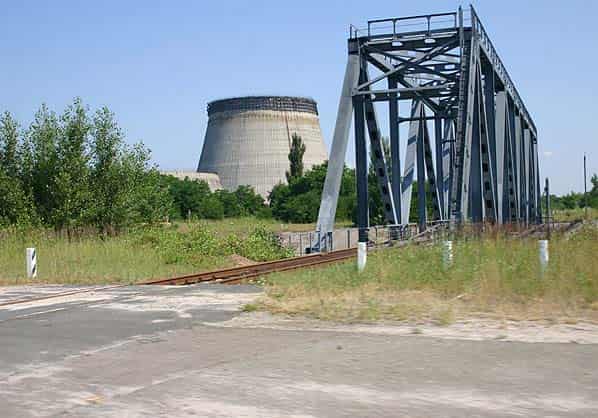
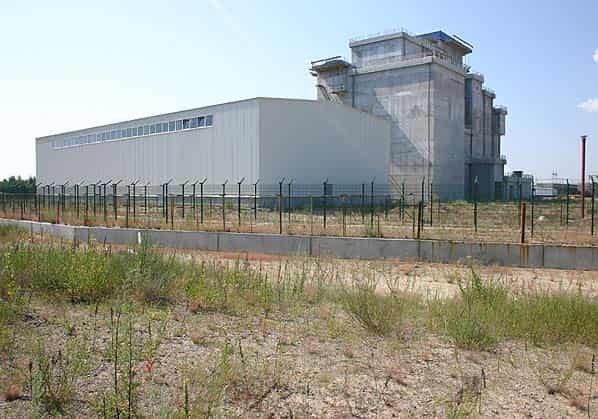
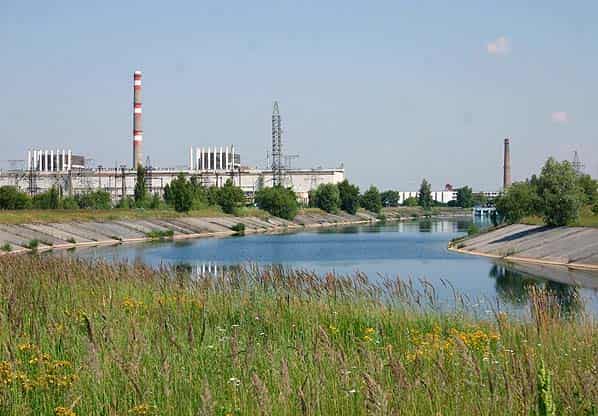
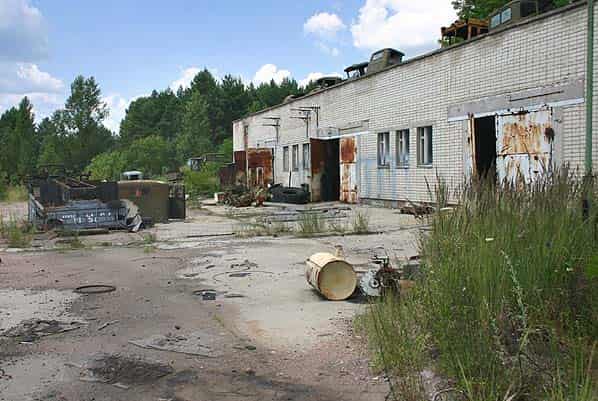
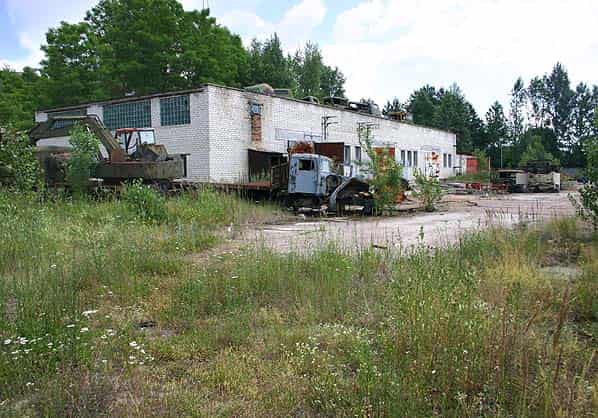
The power station itself is well-maintained. A small conventional power station has been built next to it. Visitors are driven around the perimeter road and close to Units 5 and 6, with a semi-constructed cooling tower nearby, and then along the line of the main buildings to the information office a few hundred metres away from Units 3 and 4.
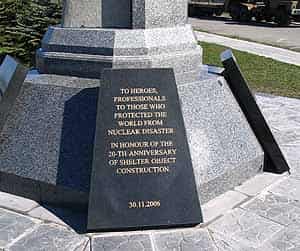
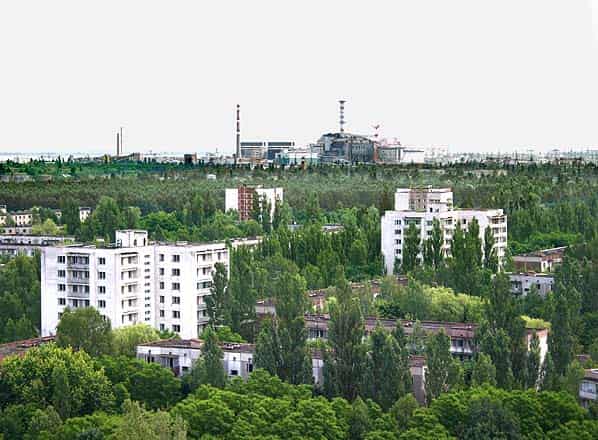
This affords an excellent view of the Shelter-Object, especially the recently-strengthened western wall. The information office has some interesting films about the clear-up operations at the site, and a spectacular model of the fourth unit. This model took six months to construct; the real Shelter-Object took seven months and is incredibly detailed, showing the damage to the inside of the reactor hall, the precariously balanced upper shield nicknamed ‘Ylena’ and the fuel containing material (the term given to the meltdown lava) in its correct relative position. Photography inside the exhibition is not permitted. Outside is an official commemorative monument to those who constructed the Shelter-Object.
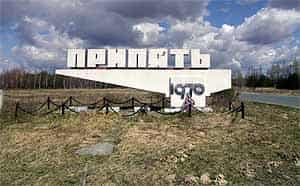
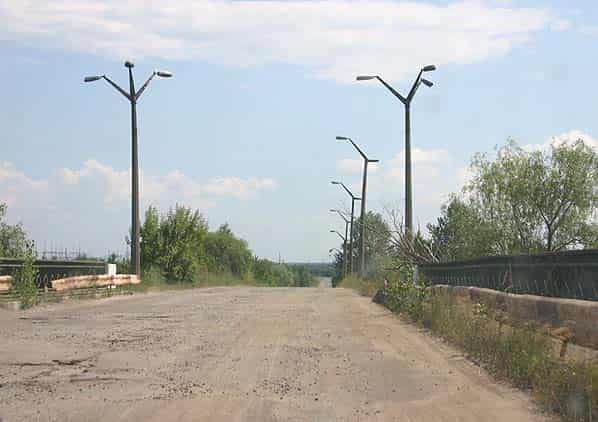
Not far from the power station perimeter is the town sign for Pripyat, dated 1970, beyond which is another small checkpoint. The road leads over the railway bridge; although the contamination level here is now relatively low, it is reported that some people were fatally irradiated here in 1986.
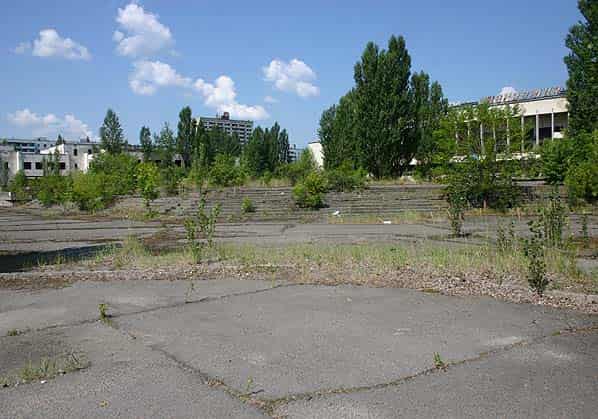
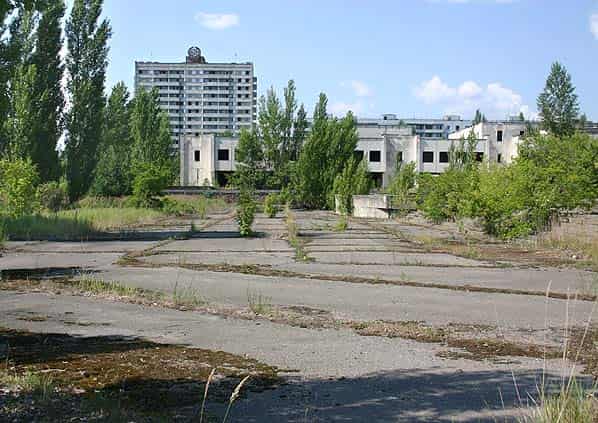
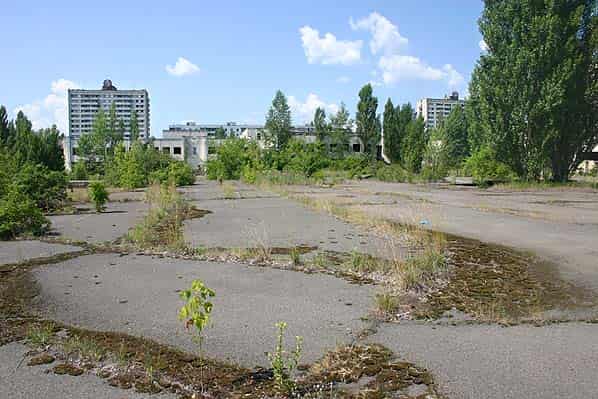
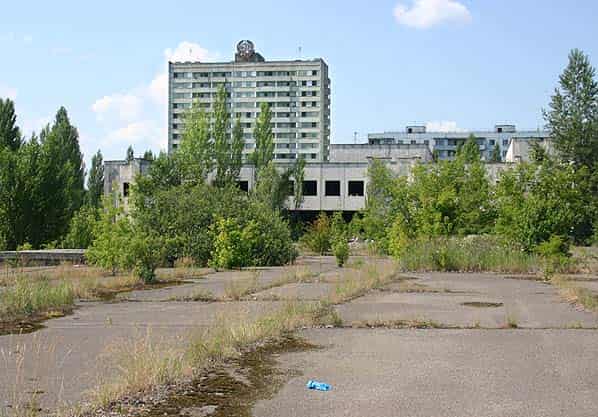
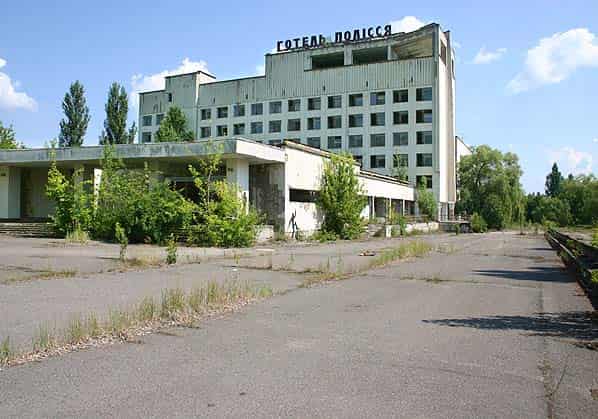
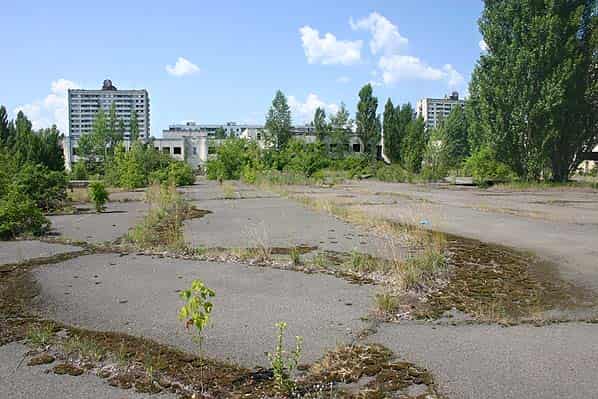
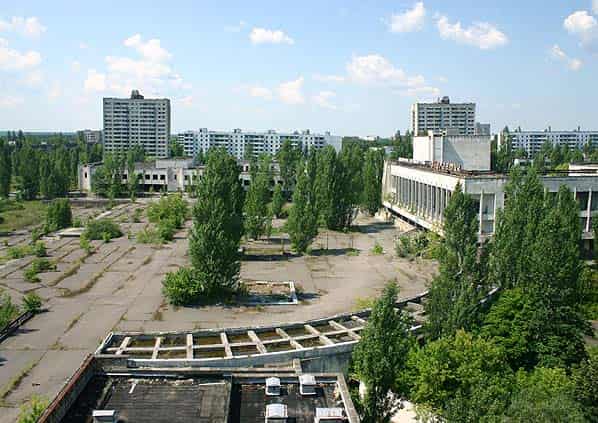
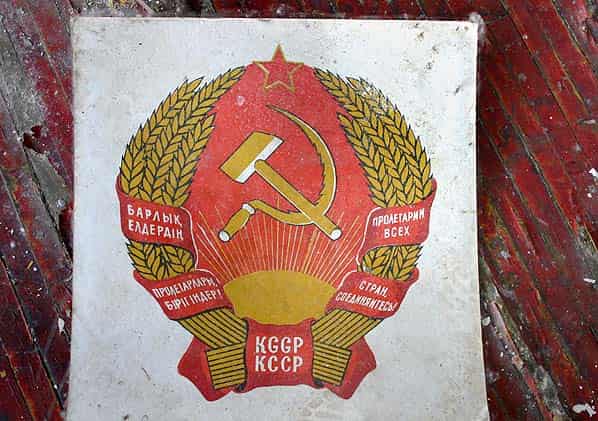
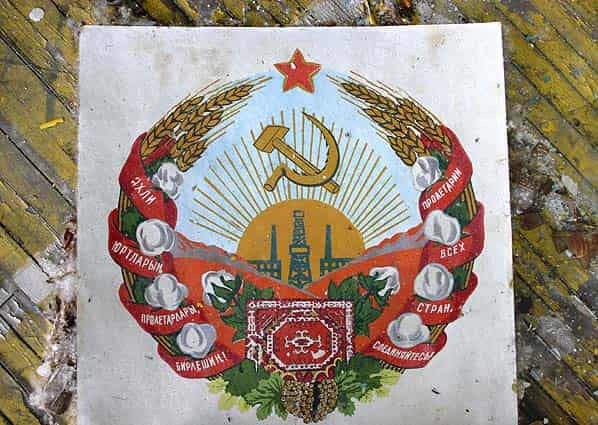
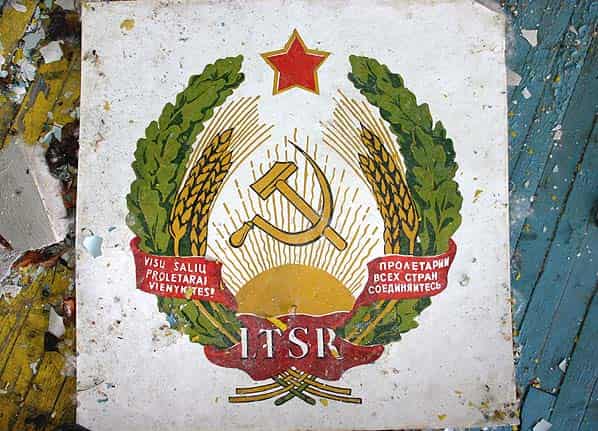
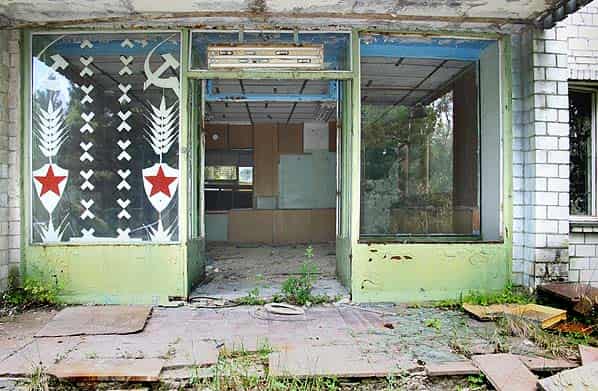
Some of the buildings still have hammer and sickle decorations on their roofs and an abandoned restaurant has a good view of the square. This square was one of the areas used as a landing pad by the helicopters involved in the flights to drop sand into the reactor.
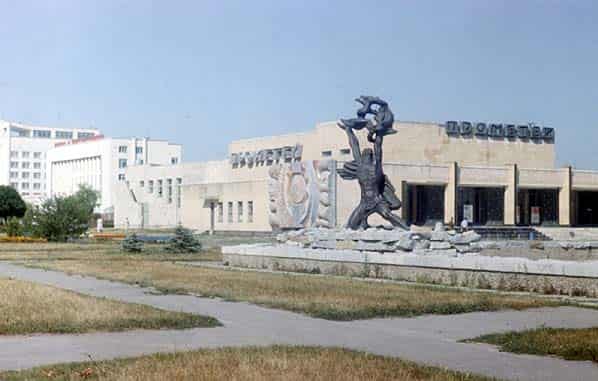
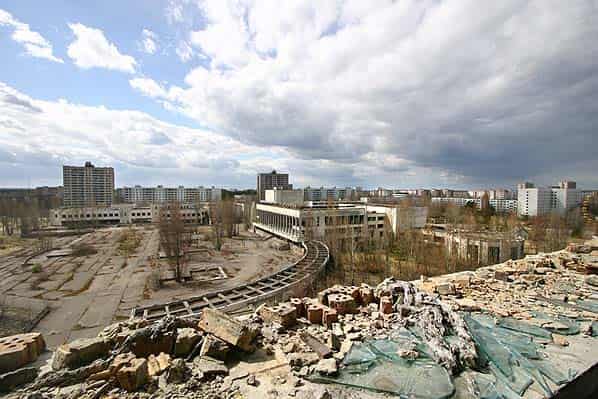
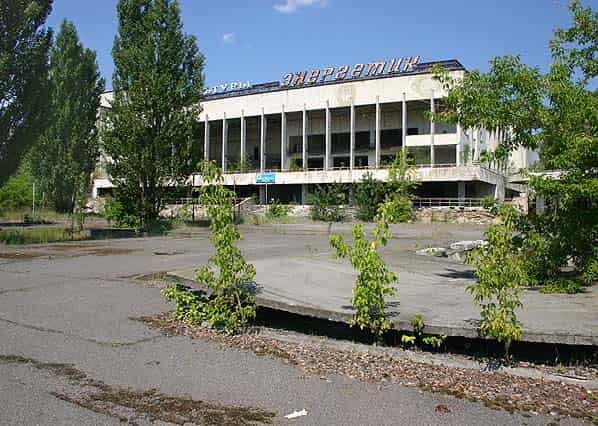
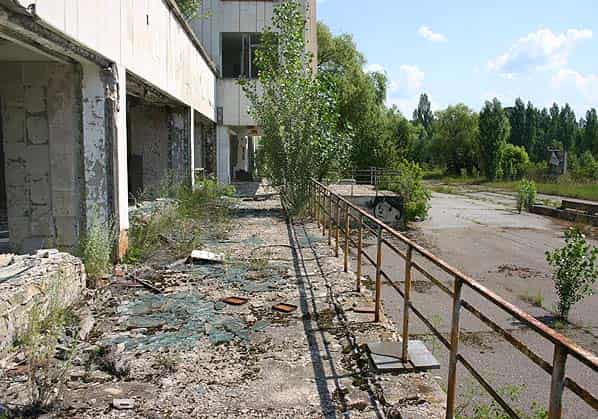
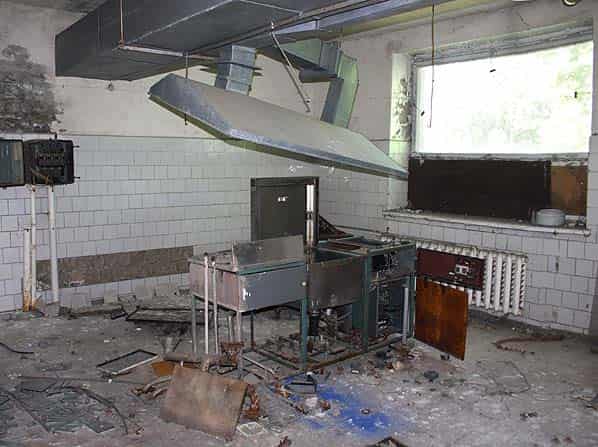
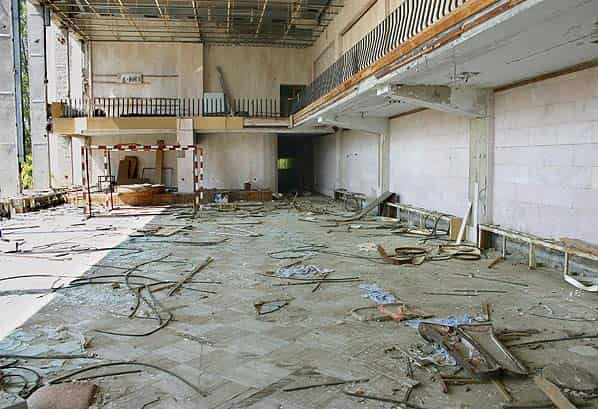
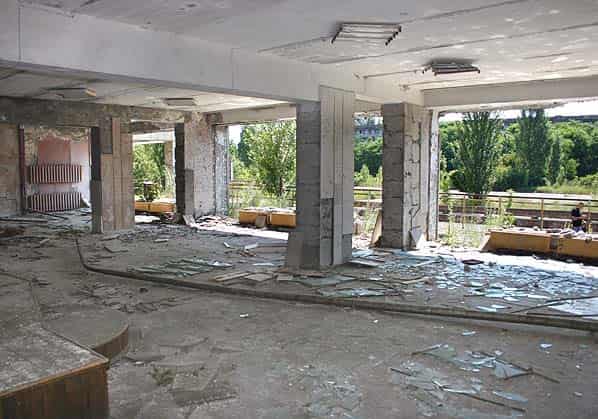
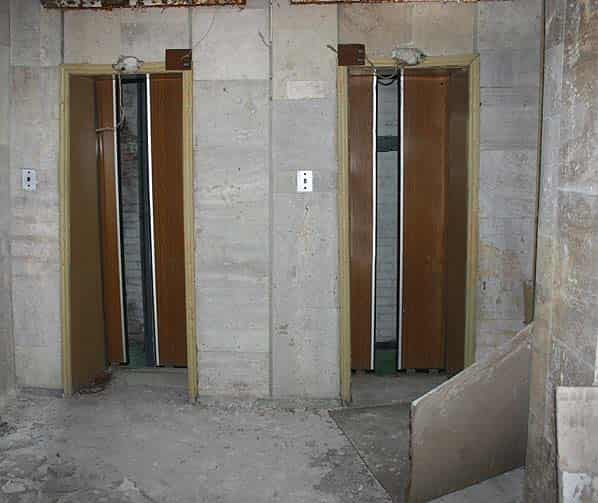
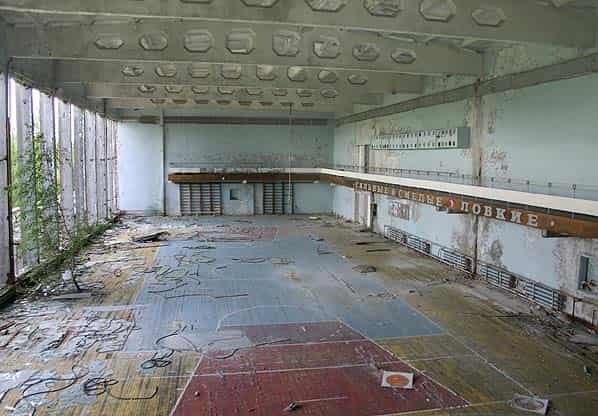
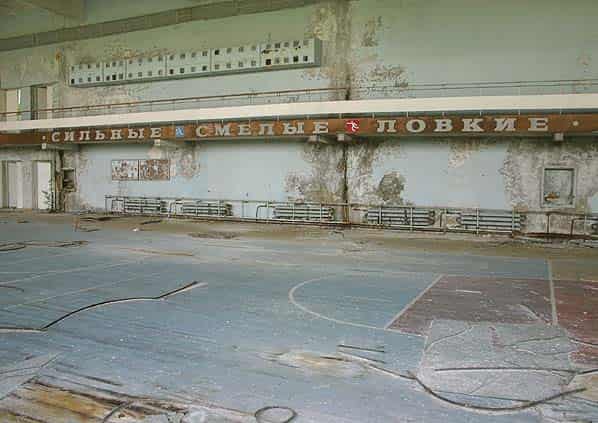
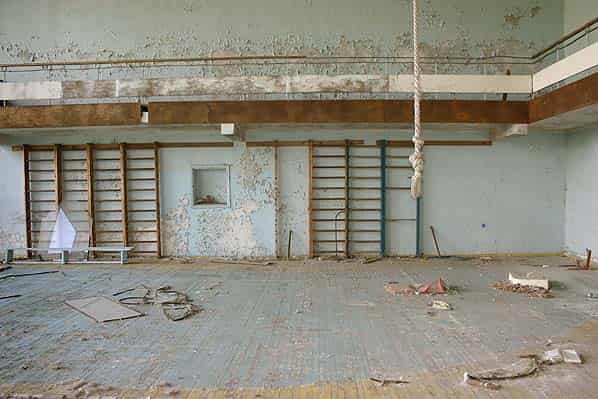
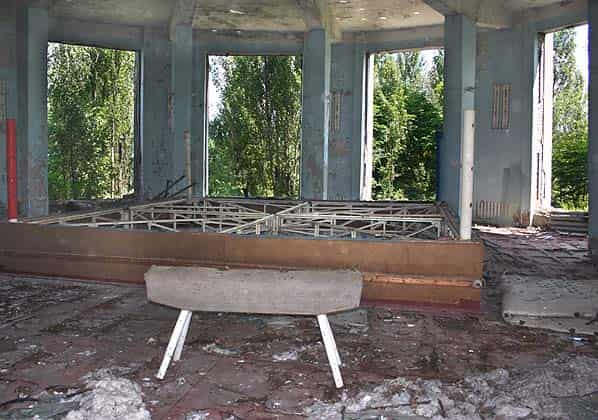
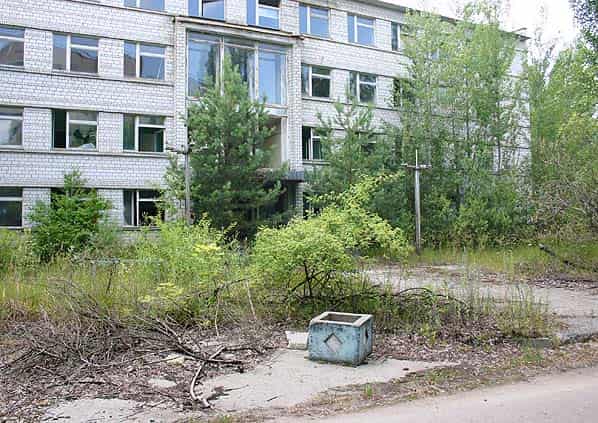
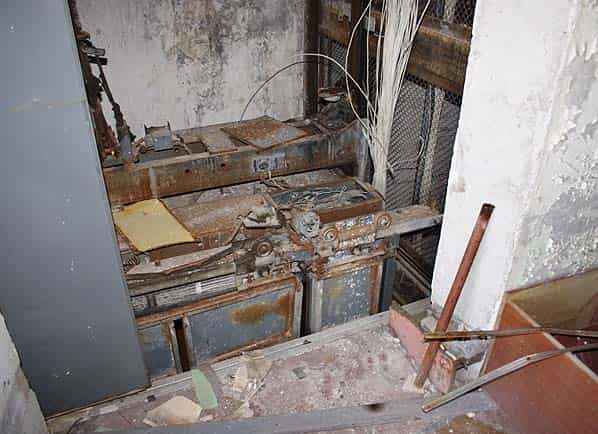
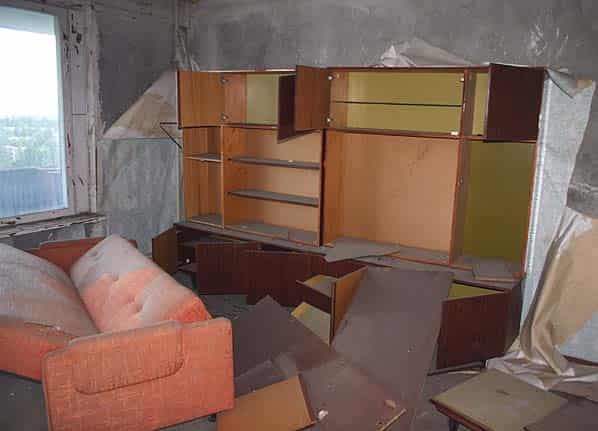
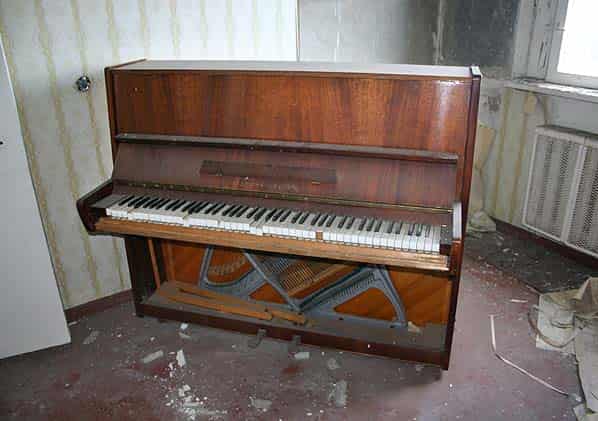
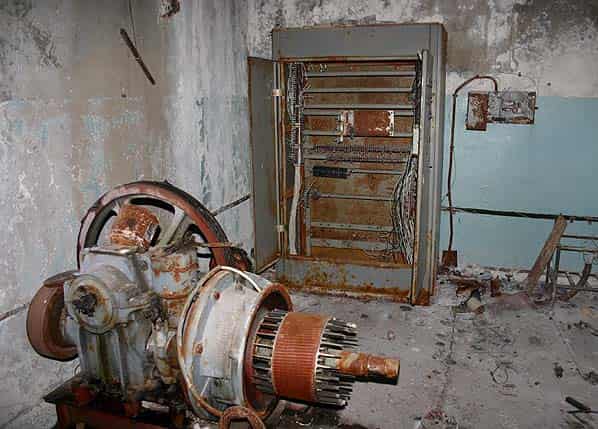
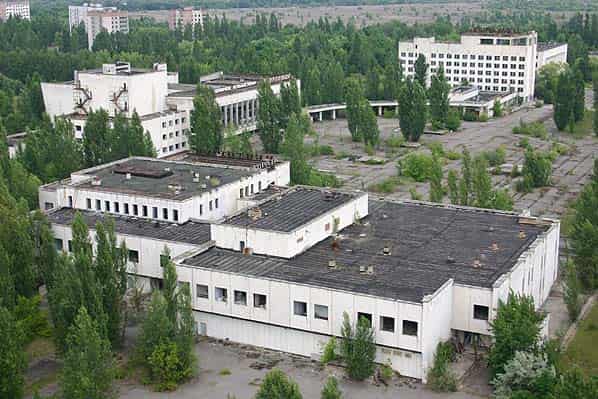
Most roads in Pripyat seem to lead to the Cultural Centre, which is still impressive despite the decay. The foyer has been stripped of its glass curtain frontage and many of the walls are down to bare concrete, but the odd remaining piece of marble cladding gives an idea of how it would have looked. The staircase from the entrance has a mural on one wall depicting farming scenes as well as views representing the electricity from the power station; this is not protected from the weather and is deteriorating but for now is still in good condition. Most of the buildings have been emptied of furniture to discourage looting and in recent years the buildings have been cannibalized of glass and useful metal under official permission, for other building projects elsewhere.
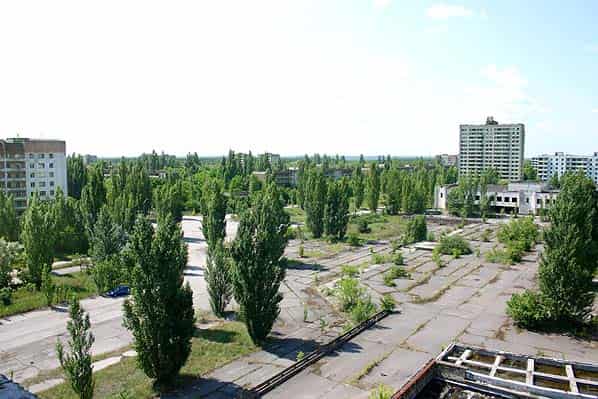
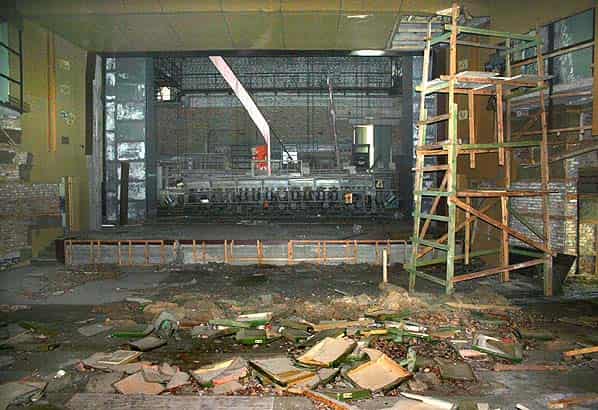
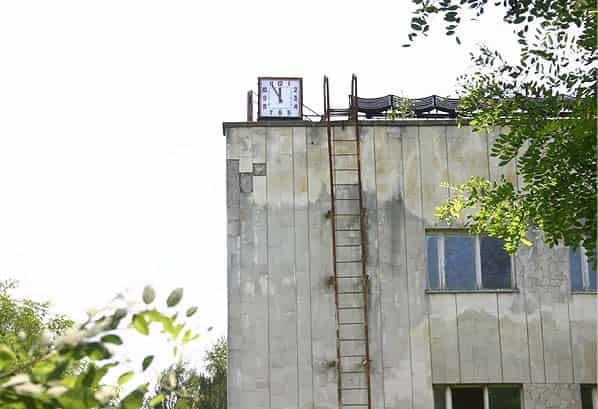
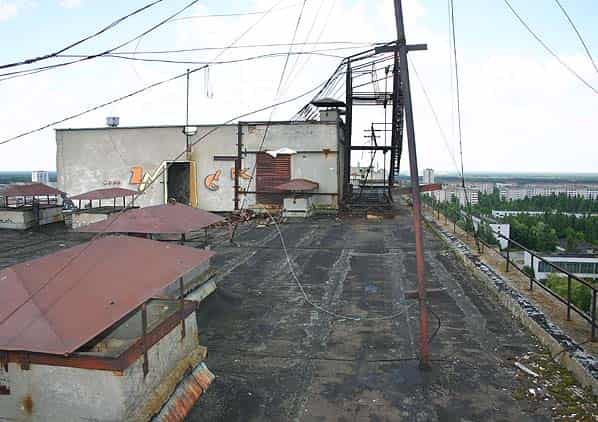
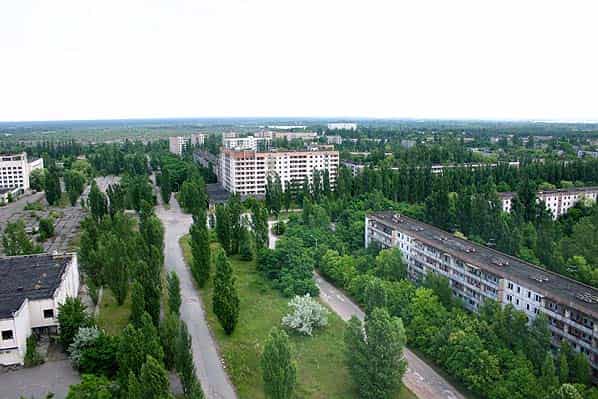
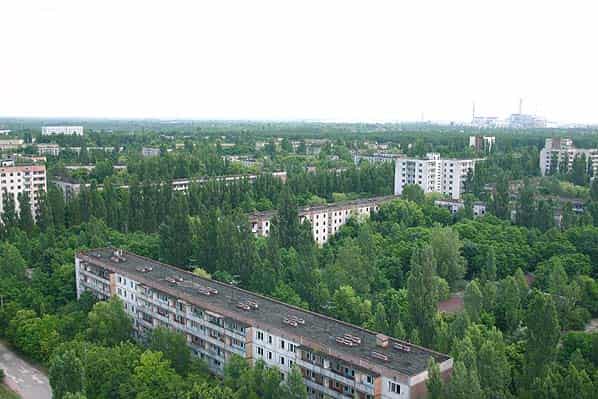
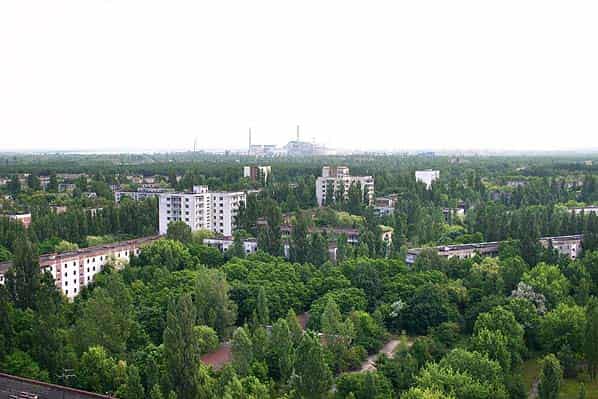
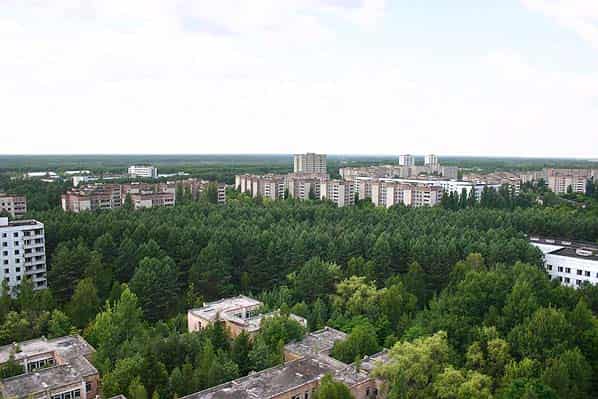
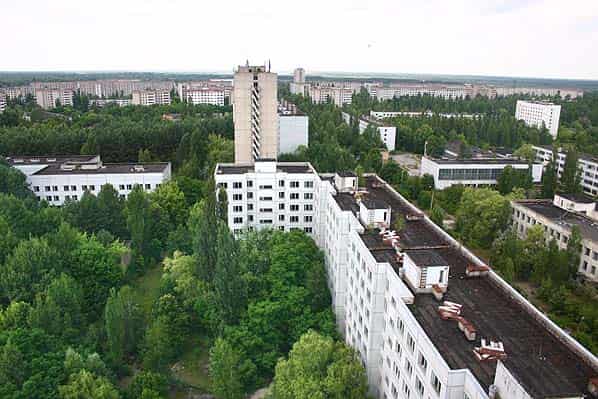
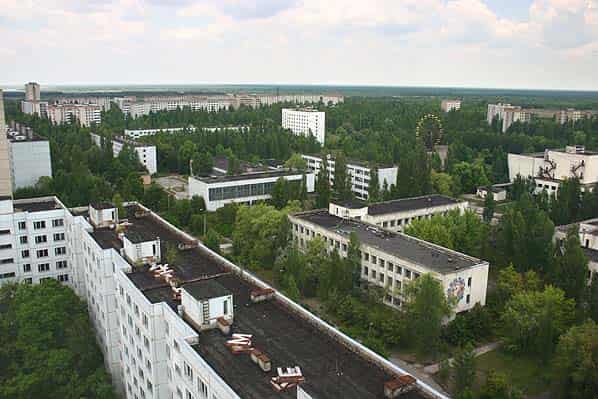
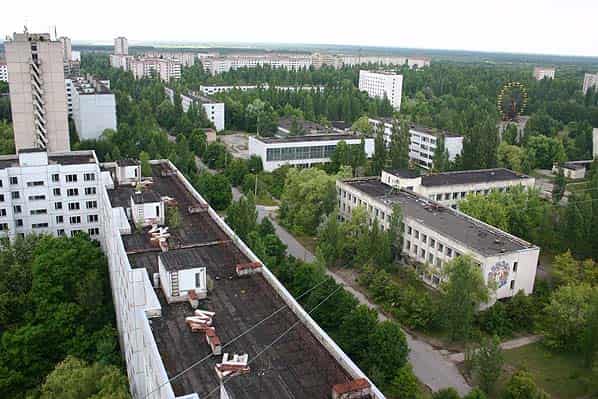
The theatre complex still has many of its lights and fittings, with some scenery flats still on the stage. Climbing up to the roof gives a view of the main square, the surrounding empty streets, and a good view of the distant power station.
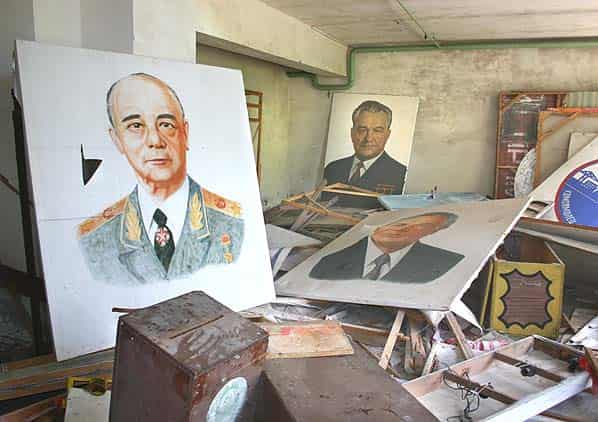
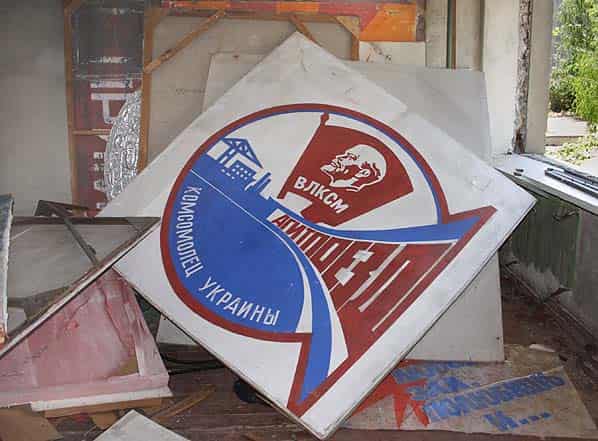
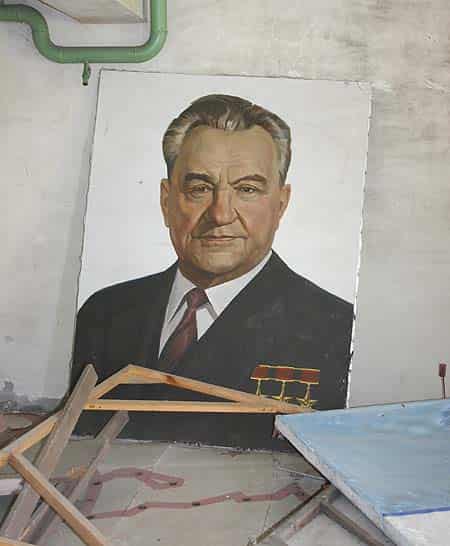
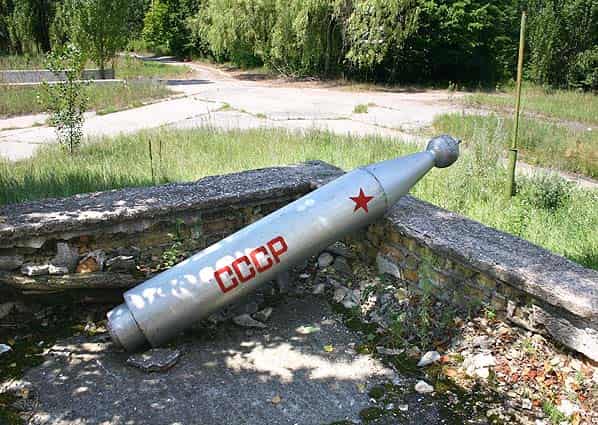
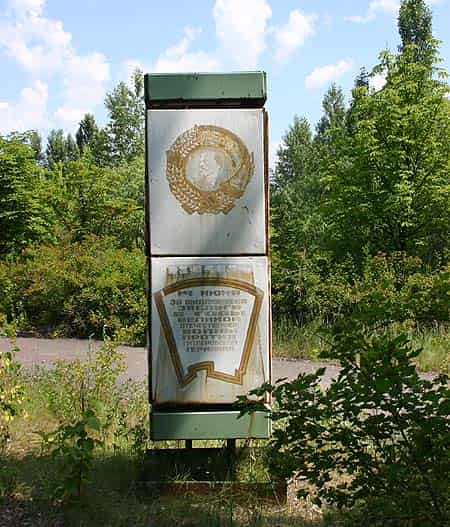
Across the way is the amusement park in what was once an open space, now encroached by young trees. There are decorative stands with historical Soviet scenes and pictures of Lenin. A cinema nearby has a distinctive, colourful bas-relief frontage.
The former port, a little way along, has a long building which apparently housed a cafe as well as being used for other purposes. It has the remains of a very impressive coloured glass mural in one window. There are abandoned tables and chairs outside, a cold-store and old drinks machines. Steps lead down to the old jetty.
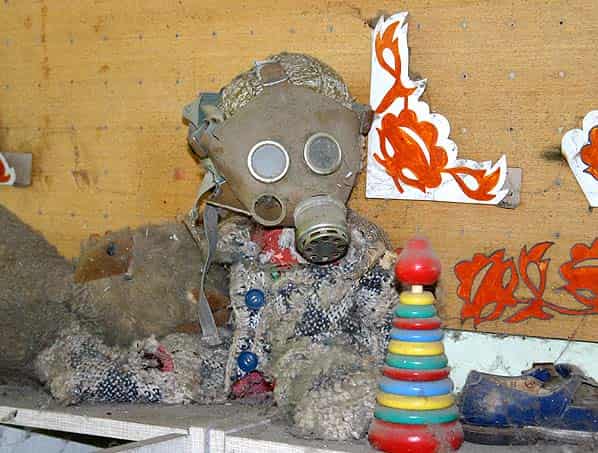
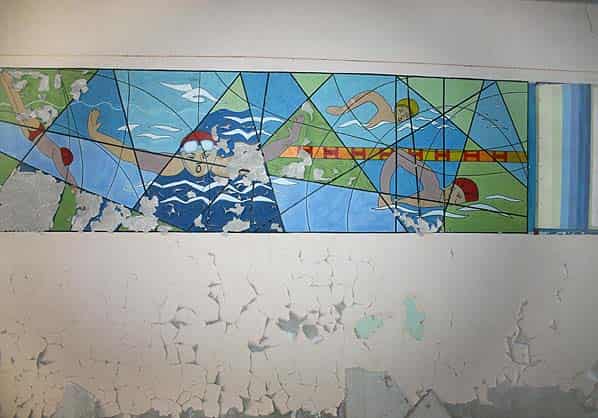
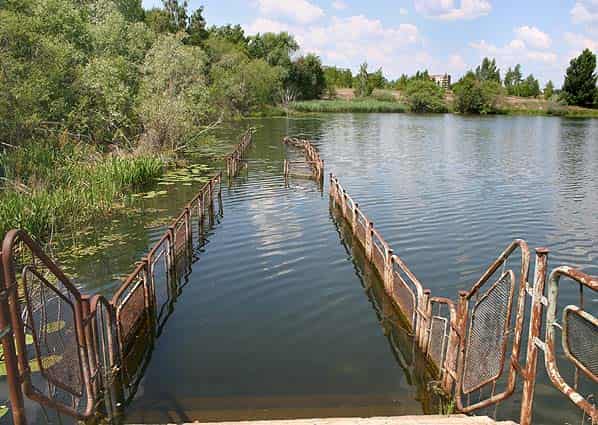
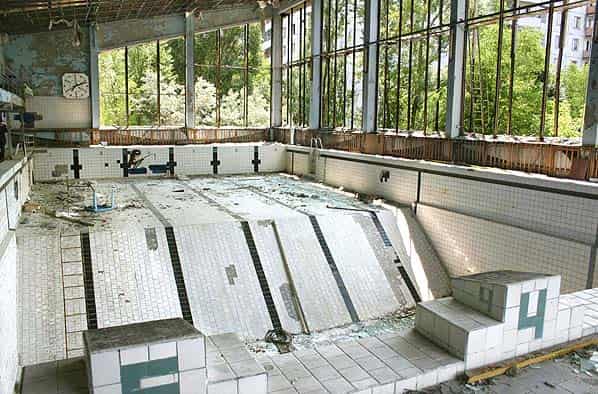
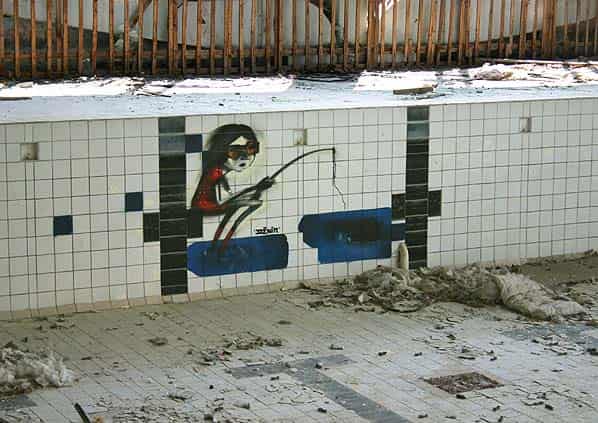
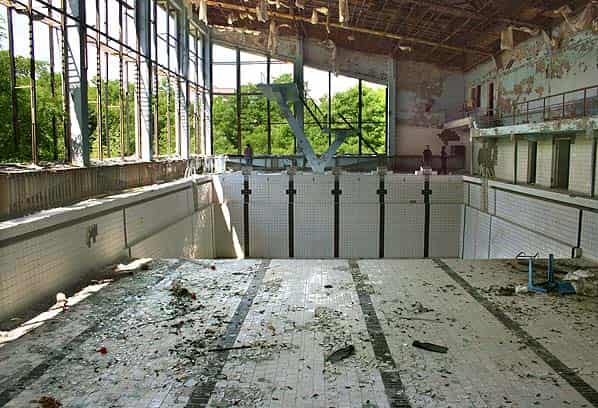
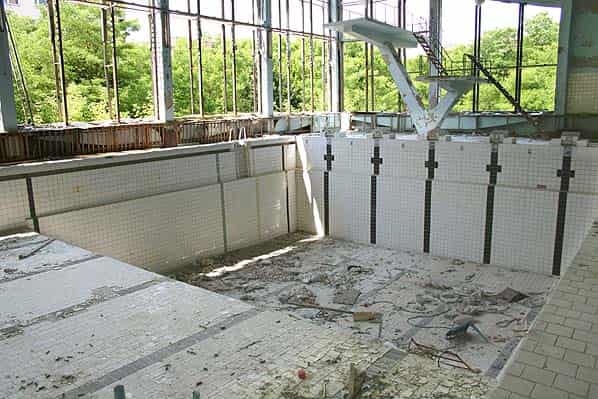
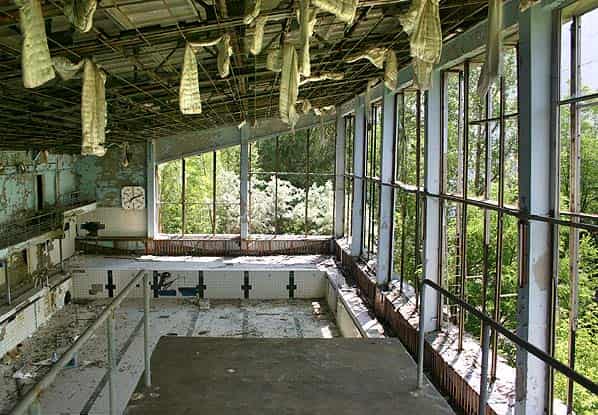
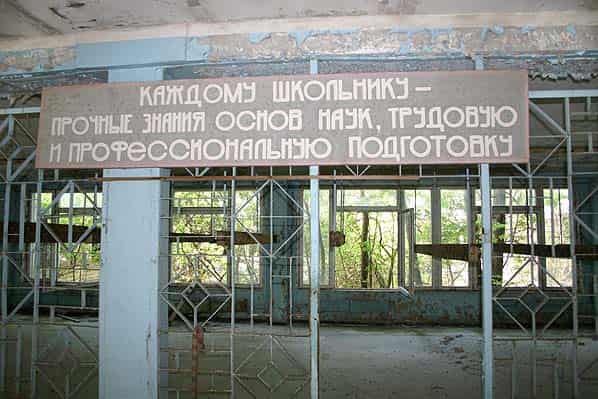
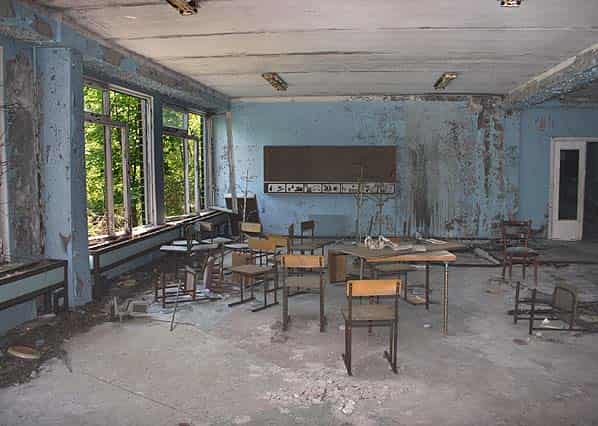
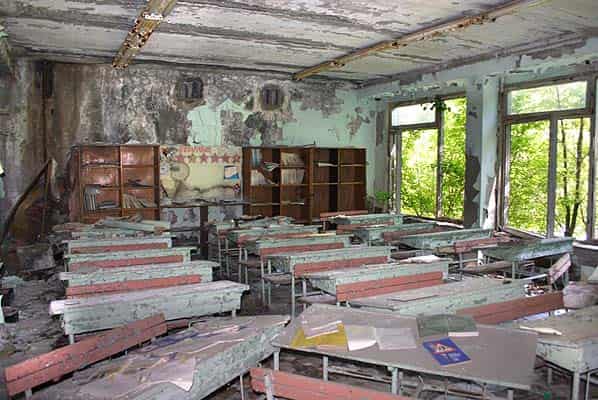
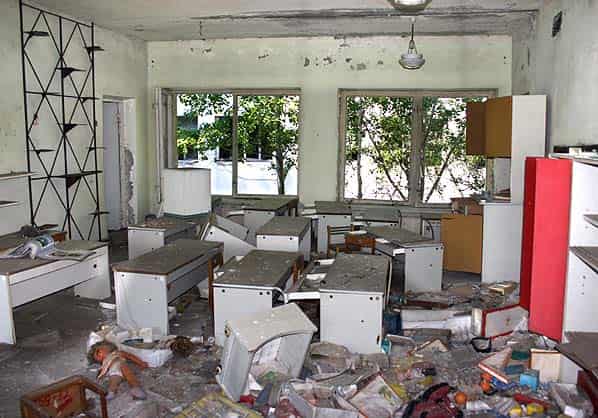
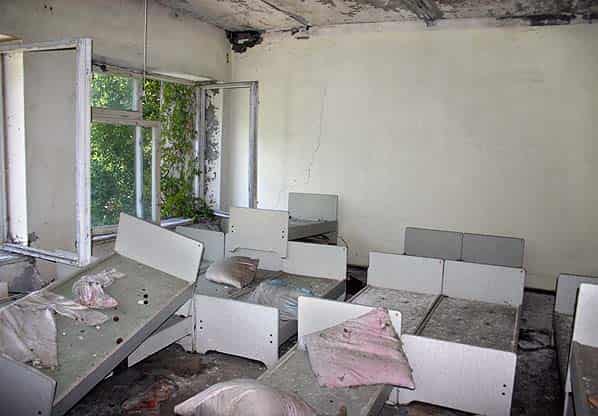
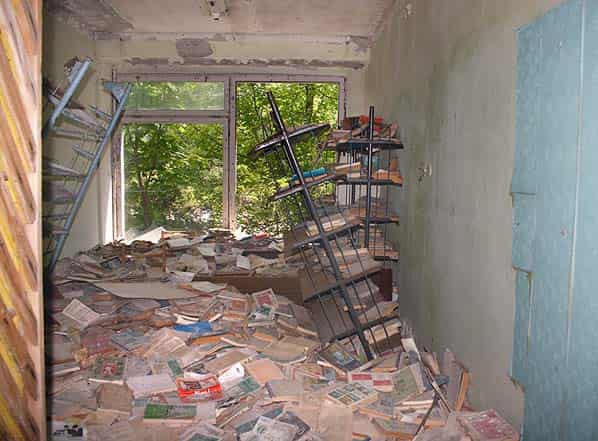
Our visit also took us to one of the main schools and the hospital. In the school classrooms, books with children’s work and teachers' comments are still sitting on the desks, and dried paints are in one of the art rooms. The empty cloakrooms, with numbered pegs for each child, are quite evocative. Nearby is the main swimming pool, some forty feet deep at the diving end. During decontamination work, water was extracted from all three of Pripyat’s swimming pools to assist in washing down.
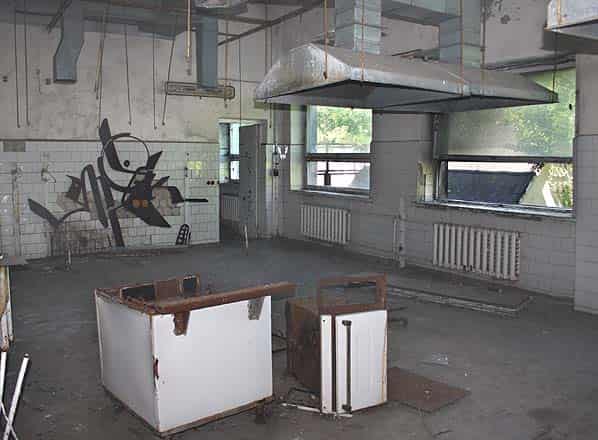
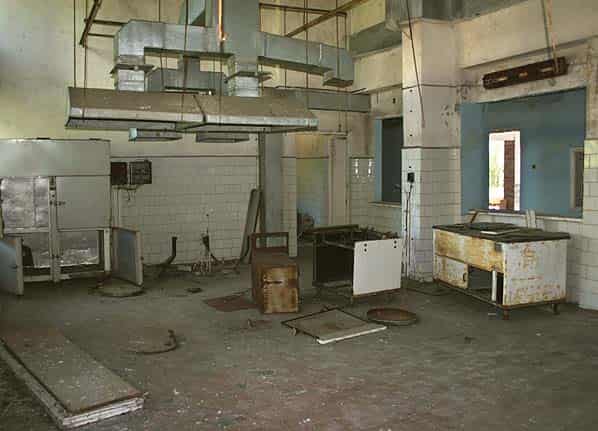
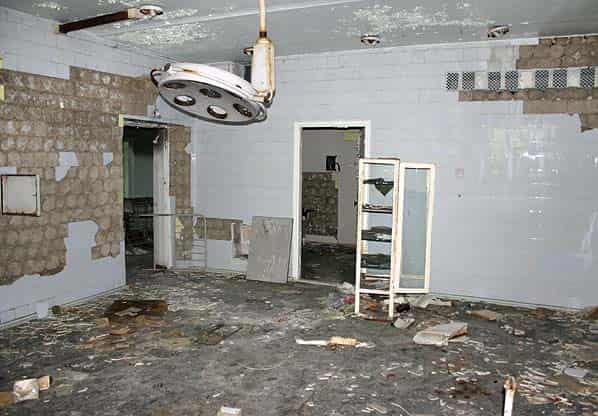
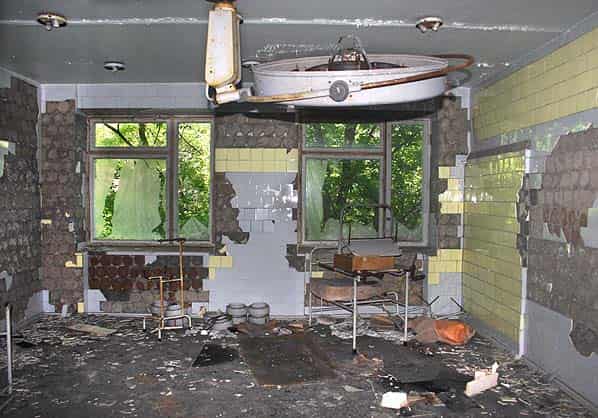
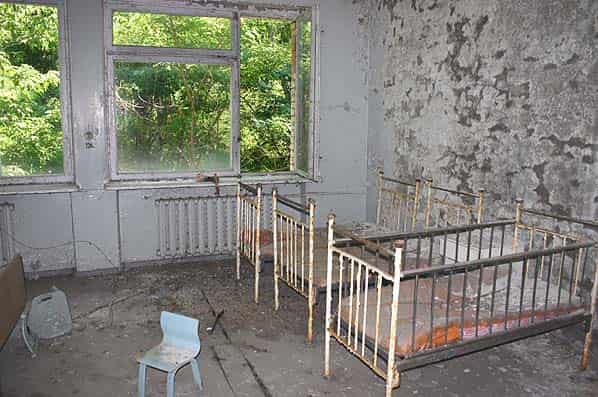
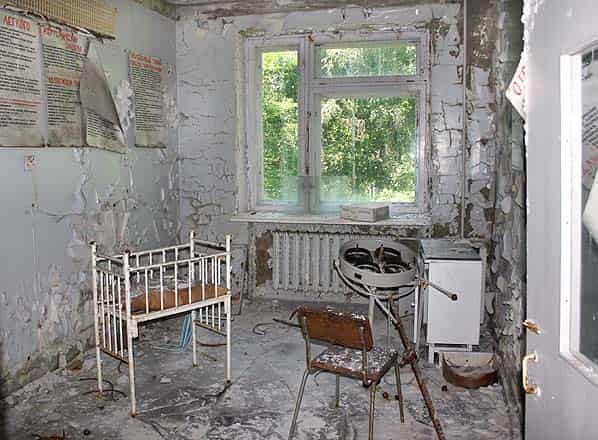
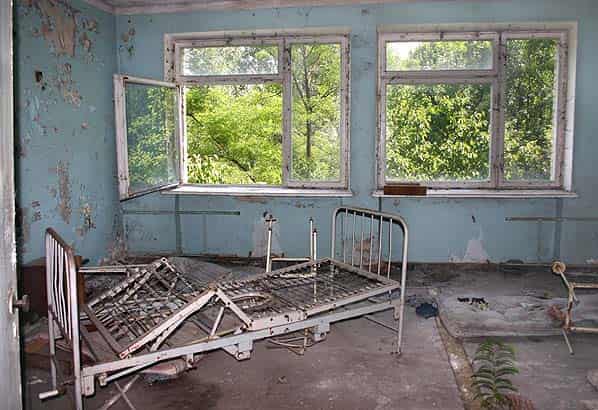
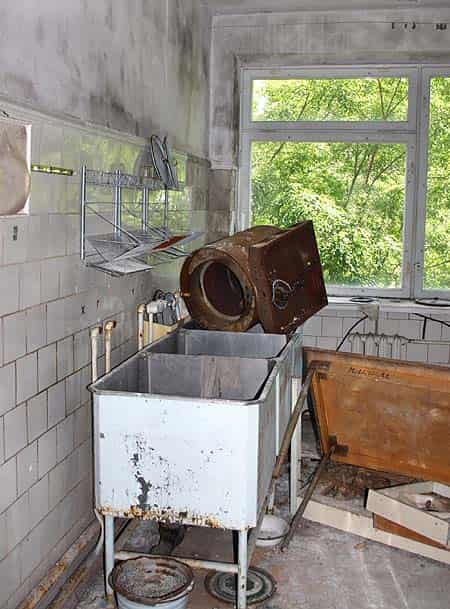
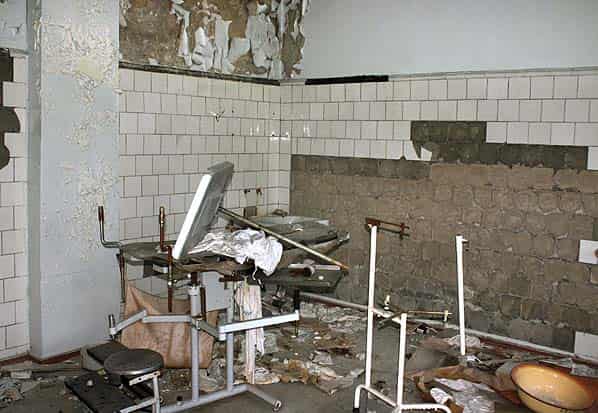
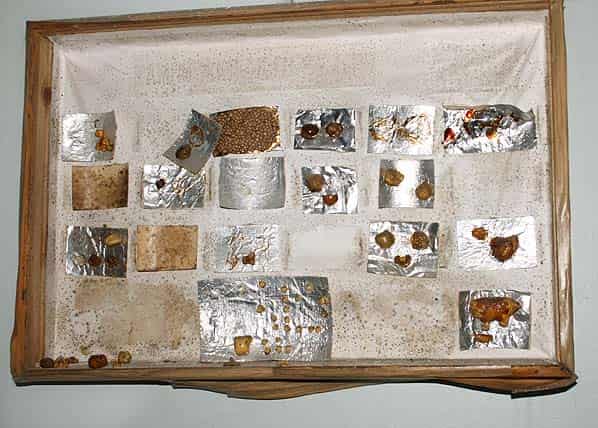
Pripyat Hospital, our last port of call, is a large building and has been fairly comprehensively stripped of its equipment. Old registers and what appears to be a duty rota are still in the reception area, and there are cots in the maternity ward and little glass ampoules on some of the floors. At the time of the Chernobyl accident, the casualties initially came here, but the hospital was evacuated along with the rest of Pripyat soon afterwards. Most of those with severe radiation sickness were sent to Moscow’s Hospital No. 6 for specialist treatment. Only one casualty from the accident died in Pripyat hospital, Vladimir Shashenok, an engineer who was badly burned in the initial explosion and died a few hours later.
THE FUTURE OF THE SITE
At time of writing, approval had just been given for the new shelter to be constructed over the fourth unit. (see above and left) Current plans are for a hangar-like arched construction which will cover the building and its distinctive chimney, and will finally eliminate the danger of falling material ejecting radioactive dust to atmosphere. Once this new roof is in place, final dismantling can begin of the remains of the reactor.
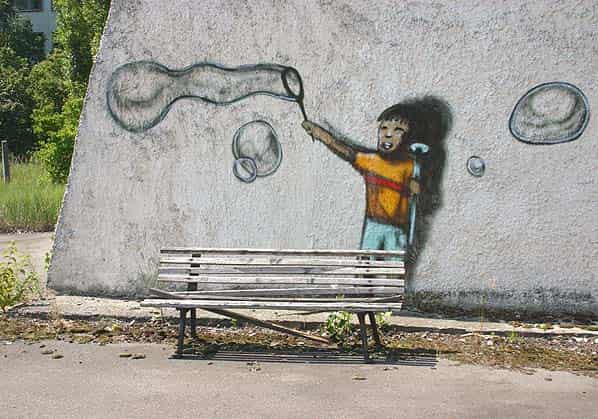
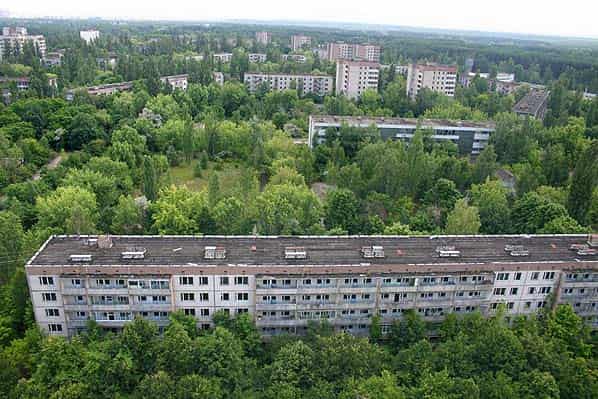
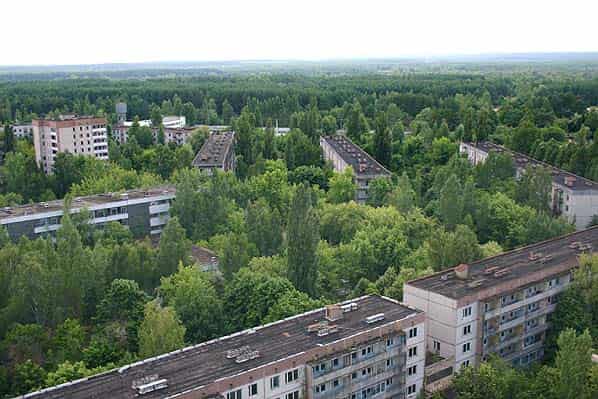
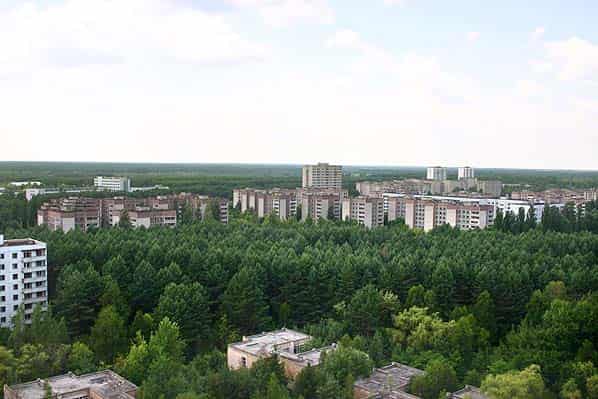
Pripyat is becoming a tourist attraction in its own way, but because of the contamination it is unlikely to be developed. It is returning to nature and has become a haven for wildlife and seems likely to be left as it is for the foreseeable future. A visit to Pripyat is a fascinating glimpse into a Soviet-era town and walking along the empty streets is an unusual and strange experience. Those with an interest in the Cold War especially will find it a unique place; both the Soviet symbols and architecture, and also it is the nearest thing possible to visiting a site after a nuclear strike.
VISITING CHERNOBYL
Organised trips are the only practical way to visit; the organisers will obtain the necessary documents. Photography is permitted everywhere except certain parts of the power station (photography of the Fourth Unit is allowed) and at the checkpoints. Visitors are required to stay with the tour guide at all times and groups are given dosimeters.
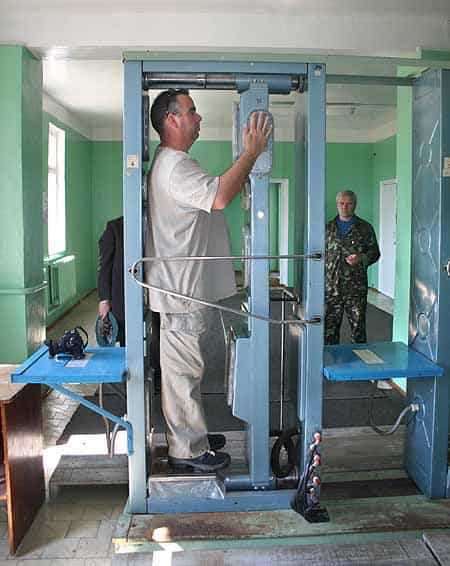
Although the background radiation in the area is obviously higher than normal, the levels are not dangerous in the context of a day visit. There are ‘hot spot’ in Pripyat but these are known to the guides and dosimeters are set to alarm at deliberately low levels to protect visitors; at one spot where ours went into alarm, the dose rate in one hour would have equated to half of a standard X-ray. Our visit gave us the equivalent amount of radiation to that which you would receive on a long-haul flight. Upon leaving the exclusion zone all persons are required to pass through a scanner which checks for excessive contamination and vehicles are also checked.
The visit described here was on 12 April 2007 and the party consisted of Alex and Suzanne Gould, Jane MacGregor and Robin Ware. We would all like to thank our guides, Yuri and Maxim and also Sub Brit member Julian Nowill who organised the trip for us.
Sources:
- Ablaze: The Story of Chernobyl by Piers Paul Read, Published by Secker & Warburg 1993. ISBN-10: 0679408193
- Information Office, Chornobyl
- Yuri, our guide